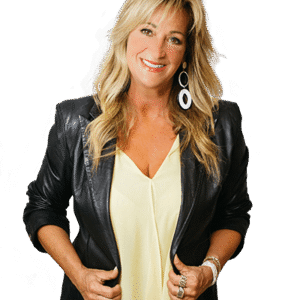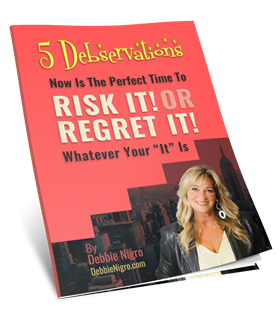

Nothing like a fast-moving, inspiring, laugh-filled conversation about living longer, living louder… and refusing to sit quietly on the sidelines of life.
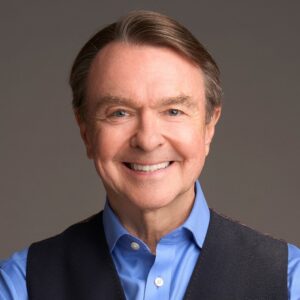
That’s exactly what happened on this week’s Wellness Wednesday edition of Keeping the “Live” in Alive! when I welcomed powerhouse guest Michael Clinton to The Debbie Nigro Show.
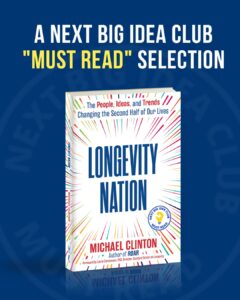
Michael — former president of Hearst Magazines and now founder of Roar Forward — joined me fresh off the launch of his bestselling new book, Longevity Nation, which was just selected by the prestigious Next Big Idea Club as one of the books expected to shape conversations for the year ahead.
And honestly? I can see why.

We’re Not Just Living Longer… We’re Living DIFFERENTLY
Michael shared a staggering reality:
“If you’re 65 and healthy, you may be living another 30 years.”
That changes EVERYTHING.
Career paths. Relationships. Retirement. Housing. Friendships. Purpose. Health. Identity.
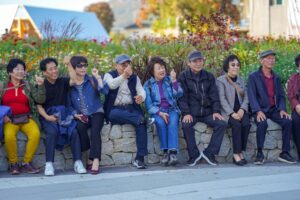
Michael explained that many asian countries have already adapted to this “new longevity” mindset far faster than the United States — with cultures intentionally built around connection, community, and aging with dignity and engagement.
One statistic that stopped me cold?
“Today’s five-year-old has a 50% chance to live to 100.”
Whoa.
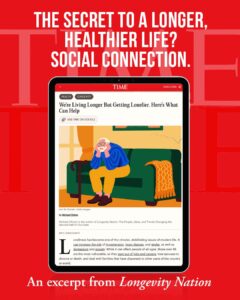
The Loneliness Problem Nobody Wants to Talk About
One of the most powerful parts of our conversation centered around loneliness — a major theme featured in a recent TIME Magazine excerpt from Michael’s book.
Michael talked about how intentional human connection has become critical in longer lives.
And one of Michael’s BEST lines of the interview?
“Texting doesn’t count. You need flesh and blood togetherness.”
YES.
He encouraged people to schedule connection, make friendships multi-generational, travel together, gather more often, and stop assuming social interaction will magically happen on its own.
I loved hearing about his adventure travel community and how they intentionally stay connected in real life — not just online.

The “Re-Imagineers”
One of my favorite concepts from Michael’s work is what he calls the “Re-Imagineers.”
These are people over 50 who suddenly realize:
“I may have another 25–30 GOOD years ahead of me… now what?”
And instead of slowing down, they’re:
- launching businesses
- learning new skills
- going back to school
- traveling
- creating
- starting second careers
- falling in love again
- reinventing themselves completely
Basically… my kind of people.

Michael pointed out that older entrepreneurs are often MORE successful because they have wisdom, relationship capital, industry knowledge, and perspective younger founders may not yet have.
I nearly jumped out of my chair because I’ve been saying this forever:
“Magic happens in the balance of talents between youth and wisdom.” – Debbie Nigro
Bottom Line?
This wasn’t a conversation about aging.
It was a conversation about POSSIBILITY.
About purpose.
About staying curious.
About refusing to emotionally retire from life.
About finding new reasons to wake up excited.
As Michael said so beautifully, this generation is rewriting the script for what life after 50, 60, 70 — and beyond — can look like.
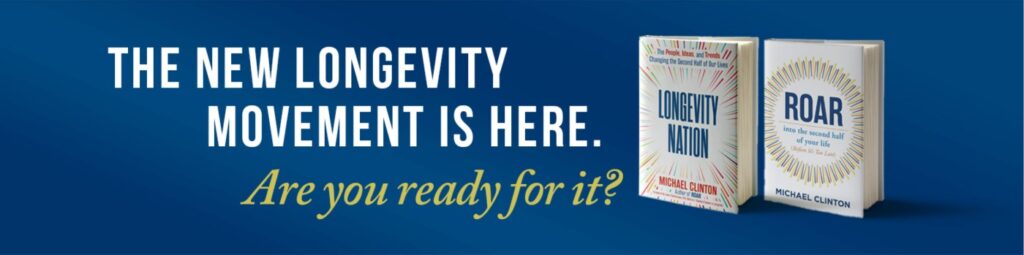
Enjoy this inspiring and important conversation with Michael Clinton, author of Longevity Nation on “Keeping the ‘Live’ in ‘Alive’! on The Debbie Nigro Show. It’s important insight into how the world of living longer has changed. It’s about living longer with purpose, fighting loneliness, reinvention after 50, and why the “Re-Imagineers” are redefining aging.
If you’d rather read than listen the audio transcript is below.
AUDIO TRANSCRIPT:
050626-2
0:00:00
(Speaker 1)
And now, back to the Debbie Nigro Show. All right, how to turn our extra years into extraordinary years. That’s the theme today here on the Debbie Nigro Show, Wellness Wednesday Edition. It’s all about keeping the live in alive. Because what good is it if you’re living if you’re not living? You know what I’m saying?
0:00:36
(Speaker 1)
I’ve been following my next guest from the minute he started roaring forward. Michael Clinton, founder and CEO of Roar Forward, former president of Hearst Magazines and best -selling author of Longevity Nation, which just came out, like, hot off the press. This book and Michael are having a moment. The book was just selected by the Next Big Idea Club, which is the one curated by Malcolm Gladwell, Adam Grant, Susan Cain, and Daniel Pink as, like, the book That’s going to matter, or one of the books, but this one in particular, 12 months from now before anybody else catches on. You know, I’m always early, early. I got a good instinct.
0:01:20
(Speaker 1)
Anyway, Longevity Nation is leading the conversation because we’re talking about something big, really, really big. And it’s about living longer, but also living better. Michael, I’m so pleased to have you again. Debbie, it’s always great to be with you. Thank you for that lovely introduction. Hello.
0:01:37
(Speaker 1)
Hello. Hello. Hello. I hope you don’t mind. I stole some pictures from your Facebook. I mean, from your LinkedIn.
0:01:43
(Speaker 1)
And the reason I did is I wanted to call attention to what Time just published, which is an excerpt of your book, which tackles a very specific piece of the puzzle, which is loneliness in longer lives. And that’s just one of the many things. But Time, It’s beginning to capture a lot of good imaginations in terms of this topic, which is a very relevant topic for today. Yeah, I’ve been very early on this myself. And when I saw you speaking about it, because I’m a huge champion, I joke around, I’m delusionally young and outrageously fun.
0:02:25
(Speaker 1)
I’m always starting new companies and new things. People are like, she mentally ill. But I got this energy, right? And I’ve been, I share it. And I try and convince people risk it or regret it now or never. What are you doing here?
0:02:37
(Speaker 1)
So when you started doing this formally, I started really getting interested, and I’ve watched pretty much your every step around the globe. How many countries did you go to? Gosh, you mean with Roar? Yeah. In life. I think with Roar, I’ve been to at least 10 countries.
0:02:55
(Speaker 1)
I’ve set foot on 127 countries around the globe. Amazing. That’s another story. Amazing. Pretty much, I’m just back from Japan and Korea, as you know. Amazing.
0:03:06
(Speaker 1)
Just an offbeat question, the difference you’ve spotted in the perception of living longer in different places around the world, like what stood out to you? Well, you know, what’s so amazing, Debbie, is we’re living in this period, go back 100 years when life expectancy was 62. and you didn’t live much longer than that. Today, life expectancies are in the early 80s, but when you go to places in Asia, it’s approaching 90, and even in parts of Europe. And so this moment that if you’re, pick a number, 65 and healthy, you may be living another 30 years. So that’s a very big change than previous generations who really never thought that they were gonna get these extra years, hopefully quality, healthy, good years, But we’re now seeing.
0:03:55
(Speaker 1)
that moving into the 90s is going to become more and more the norm. Hitting 100 is going to become more and more the norm in years to come because of all the advances in science and technology generated by AI, better lifestyles, commitments to health. You know, the science says that today’s five -year -old has a 50 % chance to look to be 100. Wow, that’s a big story. It’s not on the radar in America as much as it is in Asia and in the EU, because their populations are already meaningfully older than… You know, in Japan, for example, 50 % of the population is over 50, and here it’s 35%.
0:04:38
(Speaker 1)
But we have 62 million people who are 65 or older, and that’s going to grow to 80 million in the next decade. Think about 100 years ago, there were only 7 million people in this country that age. So we’re living in an era of the new longevity, which we call it. And Longevity Nation was really talking to all of the people in science and technology and in medicine who are really going to help enable longer, healthier, better lives. Yeah. So, the Time Magazine excerpt was about, you know, people being lonely in their later years, right?
0:05:14
(Speaker 1)
Did you see that around the world? Yeah, you know, what’s interesting in… I’m going to go back to Asia for a minute. There’s a very big focus on community. You know, in certain parts of Asia, like back to Japan, there is an intention within the culture to really embrace and make sure that their older populations have human contacts every day. Wow.
0:05:40
(Speaker 1)
And it’s really built into their culture. And, you know, we don’t have that here in the U . S. We need to have that. But here’s the good news. Technology
0:05:49
(Speaker 1)
Technology innovations are going to help with loneliness. And in that Time Magazine excerpt, you read about some of the new technologies like LEQ, which is a robotic companion for people, which sounds a little scary in one way. But when you think about what it really is going to do to help loneliness and isolation, You know, it’s how we’ll use technology in the future to age in place, have access to communications through technology and robotics. It’s really quite, it sounds like it’s sci -fi, but it’s really here already, and that’s gonna help a lot. Well, I just read a story this morning in one of the publications I read called Morning News. It said, this furry AI companion may replace your dog.
0:06:43
(Speaker 1)
And it’s from the creator of the Roomba, you know, the robot that vacuums your house? Yeah, exactly right. Yeah. No, it’s really something. Yeah, yeah. Well, sometimes, you know, you’d be surprised at what fills somebody’s emotional needs, you know, it’s just amazing, right?
0:06:59
(Speaker 1)
So let’s go back to, okay, so Time Magazine did the people being lonely might be a problem. How do you encourage people you run into to be more social? Well, you know, in the world of phones and technology and all of that, I think we’re beginning to see a trend where people want to come together. you know, at events, at gatherings, certainly in sports activities and concerts and that kind of stuff. And we really need to be intentional about being with other people. You know, we all have those friends who say, you say to the friend, well, I haven’t seen you in months.
0:07:38
(Speaker 1)
He goes, well, I’ve been texting you. You know, texting doesn’t count. You need flesh and blood. togetherness to really bond with people. And so I always say schedule it, plan it, make it multi -generational. family and friends.
0:07:56
(Speaker 1)
As you know, I have an adventure travel club. We travel together. We do things. We’re on a WhatsApp app. But we get together, you know, every six weeks or so just to, you know, catch up and so forth. You have to be intentional about it.
0:08:11
(Speaker 1)
Because what happens is it drifts away. Right. There was another story today that’s very relevant to this about the market, right? And because of the affordability problem, what’s happening in the American, you know, real estate landscape is that there are families now buying multi -family homes because the young kids can’t afford their own home. They’re all living together. So that’s multi -generational living is really where everything’s moving into in the real estate world.
0:08:40
(Speaker 1)
I just thought it was kind of relevant. I want to go over to about what you said in your introduction about shortly after forming Roar, You know, you commissioned the first major study to get a deeper understanding of this newly emerging cohort. I’m reading it word by word here. And you collaborated with the National Research Group. and had all these interviews, and what did you come, it talks about the re -imagineers, I love that word, re -imagineers, the age innovators who are rewriting the script. What does this look like?
0:09:13
(Speaker 1)
Yeah, no, thanks. You know, we found these people, which I wrote about in the first book, and we continue to track them. If people go on to RoarForward . com, they can see a lot of the inspirational stories of these re -imagineers. These are the people who over 50 have had the awakening that they’re going to have a much longer life. So they are maybe leaving a first career, but they’re going to they want to continue to work.
0:09:37
(Speaker 1)
We call it a rewire in a different way. of way, maybe not full -time in the crazy full -time schedule people have, but they want to continue to work in some way for both money and purpose. They are launching hobbies. They are starting new creative pathways. They are getting recoupled. They are going back to school and lifelong learning to learn new things.
0:10:01
(Speaker 1)
They’re really a dynamic group. We studied the 50 to 70 -year -olds because we think that’s the sweet spot of the people who are really driving this age innovation. I like to say that they’re the role models in action. We all know those people, right, Debbie? We know those people that we say, oh, wait a minute, you ran your first marathon at 70? Like, oh, okay, let me think about that.
0:10:27
(Speaker 1)
Or you went back to school at 60 to learn something else? You know, my friend Alan Pasterkoff, who you might know, who’s a big venture capitalist, you know, got remarried at 89. He wrote his first book at 86. Love it. You know, so, you know, these are the people who are what I say, the role models, not just for the generation, but for the people who come after them. You know what I was thinking to myself, I’m an entrepreneur and I’m involved in a lot of deals, you know, and I have so much relationship capital at this stage of my life, that things are a lot easier to get done for whatever I’m working on.
0:11:03
(Speaker 1)
And I wanted to actually write something on how startups of young people should absolutely always have some wisdom in their mix, because it’s the balance of talents between old and young and women and men that really make stuff rock. And people who are wiser, and you say it yourself, have wisdom and experience and knowledge and a desire to put it to use. So true. In fact, in the book I write about this, there’s a whole chapter on this, and the Kauffman Foundation and other organizations have actually studied that older entrepreneurs tend to be more successful and have more longer runway in their businesses. You touched on it.
0:11:40
(Speaker 1)
They know a lot of people. They have the wisdom. They have, in many places, the financial capacity. and or ways to get financial support. They, you know, they know an industry or they’re a knowledge base in a subject area. And so there’s a huge trend.
0:11:59
(Speaker 1)
The Wall Street Journal did a story a few months ago about, you know, the 70 plus year olds who are becoming entrepreneurs. Yeah, I love it. So and by the way, never ends, right? I think people who have retired And I’m getting antsy because they realize it’s gonna be a long retirement are the ones who are also catching on that they better reinvent themselves I was just with a couple of people one said I think I’m gonna go to teach at the local college the other one said You know, I think I’m gonna finally build that thing. I wanted to do whatever it is I think when people wake up with passion and purpose they can go on forever when you lose the passion lose the purpose It’s hard to get out of bed You know, it’s so timely, many of the people we track who go into, quote, a traditional retirement, what we find out is that about two years in, all of the novelty was worn off. You know, they want to continue to play golf, but not every day.
0:12:54
(Speaker 1)
They thought that they, you know, all of a sudden this, like, wake up call that, geez, I’m going to live another 25, 30 years. I need to find other things to do. That’s a lot of rounds of golf. It’s ridiculous. No kidding, right? I need to have better purpose in my life and better engagement.
0:13:09
(Speaker 1)
And guess what? The kids aren’t that interested in having you hang around every five minutes. Not at all. Not at all. Go find your new pathway. And I think that this is the the generation that is having the reimagineers are the front runners on this whole concept.
0:13:25
(Speaker 1)
Yeah. You know what I got a kick out of, as you pointed out, the recent Vogue massacre. cover that was shot by Annie Leibovitz, who’s now 76. We’ve known her forever. Which was styled by Grace Cottington, who’s 85, right? And it’s iconic, right?
0:13:41
(Speaker 1)
You see our two favorite women that would be on that cover of Vogue, you know, who are sitting there like, wow, looking better than ever, just great. Because we’ve learned to accept seeing that now. I mean, I think we’ve learned to accept The Devil Wears Prada 2. You know, everything is coming now where it’s not like a one -off that somebody older is in a movie, right? Or somebody older is in a sitcom. They’re actually building sitcoms around older people because that’s like, we can see ourselves.
0:14:10
(Speaker 1)
Yay! Okay, Ted Danson, you know? There you are. Well, Michael, it’s joyful. I thank you so much for taking the time to join me today. I feel honored because I know you were on Oprah yesterday and you’re on me today.
0:14:23
(Speaker 1)
It kind of makes my day. Where can people get What’s your book, Amazon? Thank you, Amazon, Hardcover, Kindle, Audible, all the above, independent bookstores. We’re everywhere. Thanks, Debbie, so much for having me. Oh, wonderful.
0:14:35
(Speaker 1)
Michael Clinton. Really appreciate it. Longevity Nation. Thank you. Rock and roll. We’ll be 100 together.
0:14:39
(Speaker 1)
I’m right behind you. So am I. Okay, great. Hey, more to come here on the Debbie Nigro Show. Keeping the living alive here on Wellness Wednesday. Don’t go away.