
Am I Becoming an ‘AI Dopamine Dope’?
A DEBSERVATION™ by Debbie Nigro
I think I may have a problem.
I can’t stop asking AI questions.

I’ll start researching a topic, a company or a person I’m curious about. That answer makes me notice a trend. The trend makes me think of another company. That company reminds me of somebody I know who should probably know somebody else.
So naturally, I keep going.
Suddenly I’m 17 questions away from where I started, connecting dots I didn’t even know were on the same page — and possibly uncovering an idea, an introduction, an opportunity or even an actual business deal along the way.
It’s like somebody took my natural curiosity, gave it a triple espresso, and removed the speed limit.

LOVE IT.
And THAT’s the problem!
I started wondering whether I have an instant information addiction?
Is that a freakin thing?
Is this new habit doing something to my brain?
Am I becoming an ‘AI Dopamine Dope’?

Curiosity Has Never Moved This Fast
Think about how we used to satisfy curiosity.
You’d wonder about something.
Maybe you’d look it up. Maybe you’d call somebody who knew. Maybe you’d go to the library. Maybe you’d Google it. Or maybe you’d forget all about it.
There used to be a little time between wondering about something and actually finding the answer.
Now?
There is NONE!
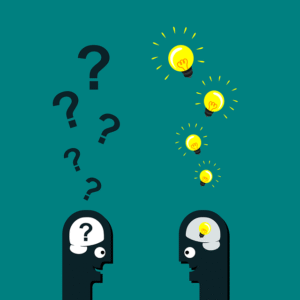
A thought pops into my head and seconds later I can be learning something I knew absolutely nothing about five minutes ago.
That’s what feels different. The speed.
There’s almost no time anymore for curiosity to cool off or for a question to get forgotten. I can follow an idea while it’s still bouncing around in my head — and see where it takes me.

For someone naturally curious like me, AI can feel like ‘a brain casino’.
Every answer is another pull of the intellectual slot machine — and you never know what the next one might turn up.
Just one more question…
Yeah, right. LOL.

So What Does the Research Say?
Naturally, I did what any potential ‘AI Dopamine Dope’ would do.
I asked AI to help me research whether AI was making me an ‘AI Dopamine Dope’!
And apparently, I’m not the only one wondering about this.
I was on a call this week with a super accomplished CEO when I blurted out that I kinda feel like ‘an AI crack addict’. He blurted out he was just thinking the same thing! He said we should do a podcast about this!
Inspired by our mutual admission, what do you think I did ?
I used AI to research if there was any research on this topic!
SEE what I mean???

Sure enough, researchers are now studying what they call problematic use of generative AI chatbots.
A 2026 scientific review by psychiatrist Octavian Vasiliu found preliminary evidence suggesting that things like instant reinforcement, emotional attachment, and our very human tendency to treat AI as if it were another human may contribute to compulsive use in some people.
The dopamine part is especially interesting.
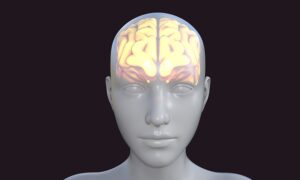
Researchers are exploring whether the immediate gratification of getting nearly instant responses — along with the anticipation of what the next answer might bring — could tap into some of the brain’s reward mechanisms.
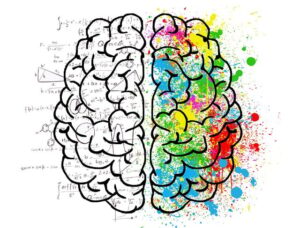
Which, of course, made me think about my “brain casino.”
Maybe part of what makes this so compelling isn’t just getting an answer. It’s wondering what the next answer might reveal. Another fact. Another connection. Another idea. Another little intellectual jackpot.
But here’s an important distinction:
Scientists have NOT proven that every interesting AI answer gives us a little dopamine hit.
Some of these proposed brain mechanisms are still theoretical.
So I’m not ready to blame dopamine for the fact that I asked 47 questions before breakfast.
Yet.
There May Be Three Different Things Going On
Another 2026 review looked at 37 peer-reviewed studies and identified three broad areas researchers think we should be watching:
Compulsive use. Cognitive over-reliance. Psychological or emotional dependence.
That distinction got my attention.
Because there’s a BIG difference between:
“I can’t stop asking AI questions.”
“I don’t want to think without AI.”
and…
“I don’t want to live without AI.”
Those are three very different conversations.

I’m personally much more interested in the first two.
Especially the second one.
Is AI Helping Us Think — Or Thinking FOR Us?
AI makes it incredibly easy to outsource some of our thinking.
Why struggle to remember something when you can ask?
Why spend two hours researching something when AI can help you understand it in five minutes? Or five seconds?
Why stare at a blank page when AI can help get the ball rolling?
That’s surely AMAZING.
I don’t want to give that up.

BUT researchers are also examining what happens when we become too reliant on AI.
That review of 37 studies found evidence connecting over-reliance with erosion of some downstream skills and poorer performance when AI was suddenly unavailable.
That one made me stop.
Because I want AI to expand my brain — not replace it.
I want it to make me more curious, not less curious.
More creative, not less creative.
More capable, not less capable.
And most importantly, I still want the original thought to be mine.

Before We All Check Into AI Rehab…
There’s another side to the research.
A group of scientists published a 2025 paper in the journal Addictive Behaviors with a title I love:
“People are not becoming ‘AIholic.’”
Their point? We don’t yet have convincing scientific evidence that heavy use of AI chatbots should be considered an addiction.
Using something frequently because it’s incredibly useful doesn’t automatically mean you’re addicted to it.
So apparently using AI a LOT because it makes me faster, more informed and more productive doesn’t necessarily mean I need an intervention.
Whew.

Maybe The Real Issue Isn’t AI. Maybe It’s Speed.
Here’s what I keep coming back to.
For most of human history, curiosity had a speed limit.
Finding things out took time.
And maybe that time did something useful.
Waiting gave us time to think.
Researching forced us to decide which questions were actually worth pursuing.
Not knowing something made us wrestle with ideas ourselves.
Sometimes we even had to…

ASK ANOTHER HUMAN BEING.
What a concept! LOL.

‘Waiting time’ for gathering information is disappearing.
And I don’t think that’s necessarily bad.
I do think having this much knowledge available this quickly is extraordinary.
I’m learning things I never would have had the time to investigate before. I’m making connections I might never have seen. I’m following ideas while they’re still fresh in my head.
And I’m mostly having fun doing it.
But maybe we need to learn how to use this incredible new intellectual superpower without letting it use us.
So Am I An AI Dopamine Dope?
I’m going with…
Not yet.
But I’m keeping an eye on myself.

Maybe the goal isn’t to stop asking AI questions.
Maybe the goal is to occasionally stop long enough to ask ourselves a question.
To think before we prompt.
To wonder before we search.
To come up with our own idea before asking AI what it thinks of it.
And every once in a while…with conscious effort…
Close the laptop.
Zip the phone inside a pocket.
Go outside.
Talk to somebody. Ask them a question!
Let your brain wander around without immediately demanding an answer.

Yes, having the world’s knowledge available at light speed is an incredible thing.
But maybe our brains weren’t designed to live at light speed all day long.
And besides…
I already drink enough coffee.
And suck on an occasional Alert Pop.
(Full disclosure, I’m a Founding Partner in Alert Pop™ — a sugar-free caffeinated lollipop — because apparently my answer to slowing down was to get involved with a brilliant fella who invented portable caffeine.)
LOL.
Now apparently, I just need to remember that occasionally I need to slowww down. Maybe do absolutely NOTHING.
And maybe just not ask any questions.
I’m working on it.
Onward!
Debbie
DEBSERVATIONS™ : Things I notice about business, wellness, people and life — funny, not-so-funny, and things that make me wonder if somebody else can relate.
A Little Light Reading for My Fellow AI Dopamine Dopes
“Problematic use of generative artificial intelligence chatbots: current stage of conceptual and clinical understanding” — Octavian Vasiliu, Frontiers in Public Health, 2026.
“Addicted, attached, or just delegating? A scoping review on ‘problematic artificial intelligence use’” — Francesca Maria Dagnino, Chiara Fante, Vittorio Guerrieri and Marcello Passarelli, Frontiers in Psychology, 2026.
“People are not becoming ‘AIholic’: Questioning the ‘ChatGPT addiction’ construct” — Víctor Ciudad-Fernández, Cora von Hammerstein and Joël Billieux, Addictive Behaviors, 2025.