

From crackers designed to kill romance to a 140-year-old soda brand proving there’s no expiration date on fabulous!
Wellness Wednesday — Keeping the “Live” in Alive! with Debbie Nigro
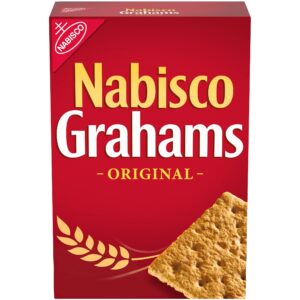
It all started with a graham cracker.
I have this little problem when I drive. My car apparently doesn’t go unless I’m crunching on something. LOL.
I graduated from potato chips to crackers, and one day, while munching on a Nabisco graham cracker, I started wondering: What the heck is Graham?
Well, that little question sent me down one helluva rabbit hole! Thought I might as well take you guys for the ride.
Did you know graham crackers were originally created as a health food intended to discourage people from getting too frisky?
Yes. You read that right.
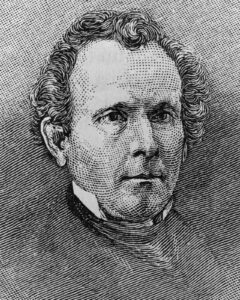
Back in the 1830s, a Presbyterian minister named Sylvester Graham believed that what people ate affected not only their physical health but their morality. He promoted whole grains, vegetarian eating, bland foods, and avoiding anything that might overstimulate the body. Including romance!
His followers were even called Grahamites.
He believed bland whole-grain foods could help suppress sexual urges. There is absolutely no scientific evidence that eating graham crackers does that, but he believed it!
And his original crackers had no sugar or honey at all. The sweet ones we know came along decades later, and Nabisco started cranking them out after it formed in 1898. Poor Sylvester would be horrified.
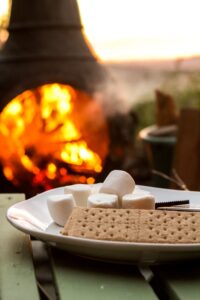
Fast-forward nearly 200 years, and we’re stuffing those crackers with chocolate and marshmallows and calling them s’mores. (The first known s’mores recipe showed up in a Girl Scouts guidebook in 1927.)
Apparently, even the graham cracker couldn’t resist temptation!

The Great American Diet Flip-Flop!
I started thinking about how many times the experts have changed the rules over the years about what we’re supposed to eat for better health.
Whenever I hear one of those startling news flip-flops, where the experts who told us to do something healthy suddenly return to say, “Oops, our mistake! Just kidding, don’t do that, I call it the latest bulletin from ‘The Benedict Arnold School of Nutrition’. LOL.
Ok so, after finding out about the Graham cracker I decided to take a little trip through the decades to remind myself what health information has changed.
In the 1950s, it was TV dinners (loved the fried chicken), canned foods, Jell-O molds, casseroles made with canned soup, Spam, whole milk, butter, and red meat. Convenience was king! Swanson’s first TV dinner came out in 1953, and as the story goes, it was invented to use up a mountain of leftover Thanksgiving turkey!
The 1960s brought fast-food mania, Weight Watchers (I can remember sitting in my first WW meeting scared to ‘weigh-in’) , calorie counting, diet sodas, and Julia Child teaching Americans how to cook French food. My wonderful Aunt Mary (who I miss terribly) was practically keeping Tab in business single-handedly! Tab launched in 1963 and hung on until Coca-Cola finally pulled the plug in 2020. I’m convinced Aunt Mary was the only thing keeping it alive that long.
The 1970s gave us granola, sprouts, wheat germ, vegetarianism, and the Atkins diet. (I loved my ‘cheeseburger no bread’ phase) Suddenly, carbohydrates were becoming suspicious. In 1977, the government put out its first official dietary goals, telling us to cut back on fat, sugar and salt.
By the 1980s and 1990s, fat was the enemy! Fat-free everything! Jane Fonda workouts (leg warmers anyone?), aerobics, oat bran, Lean Cuisine, and fat-free cookies that often replaced fat with extra sugar. In 1992 we got the Food Pyramid, with bread and pasta at the bottom, and in 1994 Nutrition Facts labels became required.
Then came the 2000s with low-carb diets, organic foods, and superfoods. The 2010s gave us kale, quinoa, avocado toast, gluten-free, paleo, keto, plant-based meats, and intermittent fasting. Oh, and the Food Pyramid got replaced by a plate (MyPlate) in 2011.
And now?

Welcome to the 2020s, where we’re obsessed with protein, gut health, probiotics, fiber, GLP-1 medications, functional beverages, mushroom coffee, and avoiding ultra-processed foods.
Protein is everywhere! In bars, shakes, pasta, snacks. I’m surprised no one has tried to sell me protein-infused sneakers. Enough already!
The point is, every decade seems convinced it’s finally figured out the secret to healthy eating.
Until the next decade comes along and says, ” “Oops, our mistake! Just kidding, don’t do that!”

Eight More Foods With Health Histories You Won’t Believe
Once I discovered the graham cracker story, I decided to do more research on specific foods that were touted as healthy for ridiculous reasons.
So here’s what else I found out.
Corn Flakes: Dr. John Harvey Kellogg promoted bland cereals as part of a disciplined, health-conscious lifestyle that also discouraged sexual stimulation. (What was with these guys against sex?) He ran a famous health spa called the Battle Creek Sanitarium in Michigan, and the flakes were served to his patients. Then his brother Will Keith Kellogg wanted to add sugar. John was furious, the brothers feuded for years, and Will went off and started the Kellogg cereal company we know today. Sugar won!
Coca-Cola: Invented by pharmacist John Stith Pemberton in 1886, it was originally marketed as a tonic for headaches and nervous exhaustion. And yes, the early formula contained cocaine-derived ingredients! The name comes from its two key ingredients: coca leaves (where cocaine comes from) and kola nuts (for caffeine). The cocaine was taken out around 1903. And get this: the year before, Pemberton sold “French Wine Coca,” which was wine mixed with coca. When Atlanta went dry in 1886, he took out the alcohol, added sugar syrup, and Coca-Cola was born.
7 Up: Introduced in 1929, it originally contained lithium citrate, a compound associated with mood treatment. Its original name was a real mouthful: “Bib-Label Lithiated Lemon-Lime Soda.” Talk about bad timing, it launched just two weeks before the stock market crash of 1929. Maybe people needed the mood boost! The lithium was removed around 1948.
So Coke had cocaine, 7 Up had lithium, and I’m thinking, what the heck was in Dr Pepper? (Hang on, I’ll get to that!)
Grape-Nuts: Introduced in 1897 by C.W. Post, it was promoted with ambitious claims about nutrition, digestion, and brain health. Early ads even claimed it could help ward off appendicitis! And here’s a fun twist: Post had been a patient at Dr. Kellogg’s sanitarium before going into the cereal business himself. My mother always bought it. I remember thinking you needed to soak it in milk for an hour before your teeth could survive it!
And here’s the kicker: It contains neither grapes nor nuts. Post called the sugar in it “grape sugar,” and he thought it tasted nutty. That’s it!
Digestive Biscuits: Britain’s McVitie’s biscuits were associated with digestive health. They got the name because of the baking soda in them, which people thought helped settle the stomach. McVitie’s version goes back to 1892. Some are now covered in chocolate. I brought a bunch back from the Sweets & Snacks convention for my college roommates this year because of an old inside joke from their London days.
Peanut Butter: Once promoted as an easy-to-eat protein source for people who had difficulty chewing. Guess who patented an early process for making nut butter in the 1890s? Yep, Dr. Kellogg again! That man was everywhere. Peanut butter got its big public debut at the 1904 St. Louis World’s Fair. Now it’s the star of one of America’s favorite comfort foods, the PB&J.
Ovaltine: Originally developed in Switzerland in 1904 as a nourishing malt-based drink. Its original name was “Ovomaltine” because it was made with eggs (“ovo”) and malt. It became one of my favorite chocolate drinks growing up. I thought it was a treat. Apparently, I was drinking nutrition! And as a radio gal I have to mention this: Ovaltine sponsored the old “Little Orphan Annie” radio show and sent kids secret decoder rings. If you’ve seen “A Christmas Story,” you know how that ended: “Be sure to drink your Ovaltine.” LOL.
Granola: One of the original health cereals obviously created by someone with good teeth. A doctor named James Caleb Jackson created the first version, called “Granula,” in 1863 at his health spa in Dansville, New York. It was so hard you had to soak it overnight! Dr. Kellogg (of course) made his own version and changed the name to “granola” to avoid getting sued. The hippies brought it back in the 1960s.
After researching all this, I came to one conclusion:
The road to good health has always been paved with good intentions… until somebody eventually covered them all in chocolate!
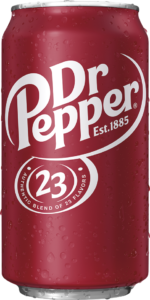
Wait! Who the Heck Was Dr Pepper?
This became one of my favorite discoveries of the show.
Dr Pepper was created in 1885 by a young pharmacist named Charles Alderton at Morrison’s Old Corner Drug Store in Waco, Texas.
That’s a year before Coca-Cola!
Alderton loved the way the drugstore’s soda fountain smelled, with all those fruit syrups mixed together, and he experimented with different flavors until he developed a combination customers loved.
So what was in it? Sorry to disappoint, but no cocaine and no lithium! Just that secret fruity, spicy blend. But like Coke and 7 Up, it was sold at the drugstore as a “brain tonic” and pick-me-up.
And the name?
Well, there are competing stories. The most popular one goes like this: the drugstore owner, Wade Morrison, had once been in love with the daughter of a Virginia doctor named Charles Pepper, and he named the soda after her father to stay on Dad’s good side. Romantic, right? Historians aren’t sure it’s true, but I love it anyway!
What we do know is that at one point the company encouraged people to drink it at 10, 2, and 4 for a little pick-me-up. That slogan came from 1920s research claiming our energy dips at those times of day. Oh, and the period after “Dr” was dropped back in the 1950s. Now you know!
And here’s something I loved: Alderton didn’t particularly want to build a beverage empire. He preferred being a pharmacist!
Imagine inventing one of America’s most famous soft drinks and deciding you’d rather keep filling prescriptions?
Some people are simply happy doing what they love. There’s a life lesson in that, too.
BTW, there’s a Dr Pepper Museum in Waco, Texas, filled with wonderful soft-drink history.
From Kickapoo Joy Juice to Caffeine: Another Rabbit Hole!
So when I landed on the museum’s web page, ( of course I did) I came across a drink I didn’t know about: Kickapoo Joy Juice!
Turns out it started as a fictional beverage in Al Capp’s old Li’l Abner comic strip and became a real caffeinated citrus soda in 1965.
Which got my radio engineer Bob and I talking about Mountain Dew, Red Bull, and just how much caffeine people are drinking without realizing it.
For perspective, a 20-ounce Mountain Dew has about 91 milligrams of caffeine, and an 8.4-ounce Red Bull has about 80 milligrams. And those are the small cans! A 20-ounce Red Bull has about 189 milligrams. And here’s a sneaky one: a 20-ounce Mountain Dew Zero Sugar has about 113 milligrams, more than the regular! For comparison, a cup of home-brewed coffee has about 95.
The FDA says up to 400 milligrams of caffeine daily is generally not associated with dangerous negative effects for most healthy adults. But sensitivity varies, and caffeine can definitely interfere with sleep.
And nobody wants to be wide awake at 3 a.m., wandering around the house looking for something to glue back together!
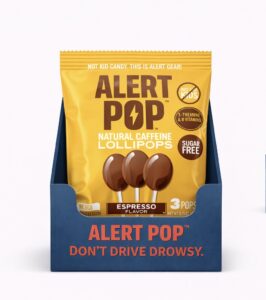
That caffeine conversation also gave me a chance to mention a product I’m personally involved with, Alert Pop™, the sugar-free caffeinated lollipop created by my partner Stephen Caldwell after a frightening drowsy-driving incident involving his daughter’s friend.
Each pop contains approximately half a cup of coffee’s worth of caffeine, plus L-theanine and vitamins B6 and B12. It’s intended for adults, not children.
I love products with an interesting story and a meaningful mission behind them.
And speaking of interesting stories…

Dr Pepper Just Proved Something I Believe About Life!
Here’s the part of the show I really want everyone to remember.
In 2024, the industry bible Beverage Digest reported that Dr Pepper had edged past Pepsi to become the number-two soda brand in America by sales volume, right behind Coke.
Think about that.
A brand that’s been around for roughly 140 years managed to shake up the soda business!
It didn’t abandon what made it different. It found new ways to reach people, connect with new generations, and stay relevant. Think new flavors like Strawberries & Cream, and a big push on TikTok to reach younger fans.
And so that got me thinking.
If a 140-year-old brand can reinvent itself and keep growing, why can’t we?
Who decided that growing older means we have to stop growing?
Not me!

I’m ageless, timeless, and weightless! You too?
So is Martha Stewart (85), who I was just reading about. She continues to reinvent herself, stay culturally relevant, and prove that influence doesn’t have an expiration date.
There are so many fabulous people who aren’t kids anymore but are still making things happen. That’s a whole other Wellness Wednesday conversation I can’t wait to have!
I hope you get as big a kick out of this episode as I did.
Had some good laughs, learned some surprising things, questioned a few old assumptions, and was reminded that staying curious is one of the most enjoyable parts of staying alive!
And remember, there’s no expiration date on fabulous!
Keep the “Live” in Alive!
— Debbie Nigro
Listen to the full Wellness Wednesday podcast at DebbieNigro.com, and catch the show LIVE on Wednesdays 11 a.m. to noon ET in the NY/CT area on WGCH Radio, 1490 AM. You can listen from anywhere as it also streams live at WGCH.com. If you’d rather read than listen the transcript of the audio is below.
AUDIO TRANSCRIPT:
111826-0
English (US) · 0:43:48
00:05
Hi, everybody. I’m Debbie Nigro. This is WGCH Radio. If you’re listening in the local New York, Connecticut area online, the digital live stream. And this is my Wellness Wednesday show, keeping the living alive.
00:59
Debbie Nigro
And I’ve got a great theme for you today. That was kicked off by my Eating a graham cracker. So I like to pick when I drive. Problem. Car doesn’t go unless I’m chewing. So I was doing the crackers. I got off potato chips, got a little into the crackers, and then I found myself with graham crackers one day, right? Because they are, I can. What are graham crackers? So that’s the whole point of what I’m about to tell you. I’m like, so I started thinking about graham crackers. Like, they’re made from graham, like what is graham? Who is graham? Why am I even thinking about this? So, I did my homework, and did you know? I need a drum roll for this because I knew, but I forgot. Then I reminded myself, now I’m telling you guys. Did you know graham crackers were originally a health food invented to keep people from getting too frisky? True story. True story. Back in the 1800s, Bobby and all my listeners, there was a minister named Sylvester Graham. And he thought bland whole wheat crackers would be the answer to improving your health and suppressing your sexual urges.
02:13
Bobby
So, that sounds about right. Okay. I don’t know about the sexual urges part. That’s exactly why he invented them to do that exact thing. All right. So now you fast forward 200 years. We’re stuffing them with chocolate, marshmallows, calling them s’mores, and plenty of sugar. Apparently, even the graham cracker couldn’t resist temptation. So, I will get more to that story. As the show goes on, but I was thinking like, what should I do with this show today that would be fun and interesting? And since every five seconds that I’ve been on this planet, which is now quite a few decades, somebody changes the rules about what you’re supposed to eat and what’s good for you.
02:48
Debbie Nigro
And, ooh, sorry, I called the Benedict Arnold School of Nutrition. I thought, you know, let me go back through the decades and let’s just review what everybody thought we should be doing decade by decade, the eating trends. And I thought that would be of some interest. To me and you guys out there, do you find that interesting, Bobby? Yeah, although I’m sure it’s going to seem less and less scientific the farther back we go. All right. Well, it depends on their. Some people have only been around a little while. I’ve been around a lot of while. All right. Let’s go to the 1950s. All right. Well, that’s going way back. Well, because, you know, I just want to start somewhere like halfway through the century. Well, we’re in the century. Okay. It was all about convenience and abundance. And everybody had TV dinners. Swanson, 1953, the TV dinners. And then there was canned food and frozen food everywhere. That’s how you were supposed to do it. And then a lot of. Yeah, but frozen and canned were a whole different issue. Frozen didn’t become as. Popular at first. Canned was everything. Everything, right? But there was a lot of processed stuff.
03:48
Debbie Nigro
There were jello molds, like everybody brought a jello mold to somebody’s house. Casseroles made with canned soup. Spam was big back then in the 50s. And then red meat, whole milk, and butter were seen as signs of prosperity. The basic four groups were introduced at that point in 1956 to the USDA. All right, so that’s the 50s. Now we’re going to move forward. You have a little transition. I want to move. I want a little something sound to move forward to the 60s. We love it. Fast food and the first diet started in the 60s.
04:22
Debbie Nigro
McDonald’s. KFC, Burger King, they’re booming. They were spreading nationwide. And then Weight Watchers was founded in 1963, and then calorie counting went mainstream. Okay? And then diet sodas arrived. Tab and Diet Right and all those sodas. And then Julia Child. Does anybody know what Tab was? Yes, Aunt Mary. My poor Aunt Mary was addicted to Tab. And I remember going to her house because she was like the best, and she’d be like, through her six can of Tab Of the day. That was early in the day. Diet cola. Yeah, diet but poor Aunt Mary, she thought Tab was going to do it.
05:01
Debbie Nigro
For weight anyway. Julia Child brought French cooking into American homes in the 60s. And counterculture interest in natural and macrobiotic food started then. Like everybody’s about their macros, macros. All right. So that’s what happened in the decade of the 60s. We’re going to the 70s now. Now here we start with health food and low-fat stuff. Okay? That’s the beginning of all that nonsense. The natural whole foods movement, granola, yogurt, wheat germ, sprouts. People used to like Wheat germs, sprouts. People used to try and have sprout sandwiches, like sprouts. I’ve eaten such a thing. They still do, but it was big on sprouts.
05:39
Debbie Nigro
And then the Atkins diet was first published in 1972. No, the Atkins, what’s that? That’s meat and cheese. Yeah. Don’t eat any vegetables, meat and cheese. You’ll get skinny. You’ll probably be terribly unhealthy, but you’ll look fantastic. The McGovern Report in 1977 and the first dietary goals for Americans started to tell people cut fat, cut sugar. Cut salt. We’re on the right track there, right? No, not really, but it’s okay. All right. And then vegetarianism started picking up speed in the 70s with diet for a small planet. And the Moosewood Cookbook. Oh, I’d never heard of those.
06:16
Debbie Nigro
Yes, I have. Okay. 1980s. We’re going to move to another decade where you can see the transition here. Now we’re in the fat free era. Okay. And the fitness craze. 1980s. Low fat free everywhere. Which, whenever they tried to make something low fat, they had to add sugar to it. Correct, Amundo. And we all were beginning to go, wait a minute, this doesn’t look right. Correct, Amundo. Snack Wells come on to the scene, 1992. And the trend’s starting to build now, right? Now you got aerobics and Jane Fonda workouts and jogging and leggings and shiny tights and outfits.
06:54
Debbie Nigro
And oat brand mania started them for cholesterol and lean cuisine. And Started hitting the freezer shelf another diet frozen meals and then microwave cooking became absolutely common and before people were like I don’t know about microwaves yeah very afraid of running those microwaves through your food right now you got the 1990s okay here we got the food pyramid. And low-fat at the peak of its happy time the USDA food guide pyramid 1992 put the grains at the bottom. The nutrition facts label started to become required in 1994. The fat free cookies showed up and the snacks that were fat free. Sugar intake went up. Supersizing started happening at fast food chains. And later in the 90s, low carb starts coming back. Now you got the Atkins revival, the zone, and the South Beach diet. None of which you hear about anymore, mostly. Okay, give me the 2000s.
07:51
Debbie Nigro
All right, low carb, organic, and superfoods are now the hot trend. Atkins and South Beach are back and they’re peaking, and the carbs are the enemy. Yes, carbs are your enemy. The USDA organic label launched in 2002, and Whole Foods expands. And now, supersize me, 2004, and a growing concern about obesity. Trans fats started getting added to labels in 2006. They later phased out. Superfoods like sahih, pomegranate, green tea are in and now you have my pyramid in 2005. But that’s not the end of it because now we’re going to the 2010s. Clean eating and plant based.
08:31
Debbie Nigro
My plate replaces the pyramid of 2011. Gluten free, paleo, whole 30 later on, keto. You got clean eating, green smoothies, kale, quinoa, avocado, toast. Plant based meat goes mainstream with Beyond Meat, way beyond to the impossible foods. Intermittent fasting shows up, and sugar becomes the new villain. Now we have soda taxes, added sugars on labels, blah, Now, 2020s I only have so far. Oh, shit. Have so far. Oh, okay. You got wellness, protein, and the GLP ones. Okay. You got pandemic home cooking, sourdough, bread, and comfort food starts picking up speed. Protein is everywhere. It’s in bars, it’s in shakes, and high protein snacks. It’s in your pasta, it’s in the tile in my bathroom. Gut health, probiotics, fermented foods, fiber, Ozempic, Wegovy, other GLP1 drugs change how people eat and what food companies make. And now we got the pushback against ultra processed foods.
09:27
Debbie Nigro
But you know, it was strange the way seed oil. I know. Plus, real food. Says foods. But you know, it was strange the way things are. I know. Plus, real food messaging, functional drinks, adaptogens, mushroom coffee, and non alcoholic options. I just wanted to get that out. Okay, so let me just say something about your fermented foods. Yes, do you? I mean, I was eating yogurt because my mom said to do it back in the 50s. That’s the fermented food that’s strong still. Your mother should have been on this list as the only person to listen to in the 1950s.
09:53
Debbie Nigro
I don’t know why her face did not come out. She struggled to lose weight her whole life that I knew her. So did most people who were not born yesterday. Hopefully, the world will have more answers and continued research into how to make everybody healthier without having to fall for scams and shams and false information. And so I’m just laying it on the table, kids, about where we’ve been. And then when we come back Oh, you got to know more about that graham cracker because, really, really, yeah, because you know, as you’re eating graham crackers, you have to know that the whole point of them showing up was not to make you happy with a cracker or to make some more or to make one of those icebox cakes, it was to keep you from having sex. So, you come on back because this is the Debbie Nigro show on Wellness Wednesday, keeping the living alive.
10:40
Debbie Nigro
I’m happy to have you guys with me. Back in the day, if you were feeling lucky or feeling frisky, you’d have to stuff a graham cracker in your mouth to just kill that urge. That’s my story as we lead off the next segment of the Debbie Nigro version of Wellness Wednesday here at WGCH. Keeping the living alive. Hi, everybody. I cracked up because I’ve read this story before. I’ve known this story. But of course, because time goes on and I’m getting older, I forgot the story. So now I’m going to remind you of why I laugh when I see graham crackers these days. Now, I don’t know if you know this, but there are lots of people who were early advocates for healthy living, and they all had their own way of thinking about how it should go. Before anybody was talking about wellness trends or Clean eating or gut health. So back in the 1830s, there was a guy, named Sylvester Graham. And Sylvester Graham believed what Americans ate affected not just their physical health, but their morality. Yes. He was a Presbyterian minister and one of those dietary reformers way before anybody even knew what a diet guru was about.
12:16
Debbie Nigro
He was best known for promoting a vegetarian, whole grain diet and for inspiring Graham bread. It was initially bread. He was very prominent because of all these ideas he had in the 19th century and he was the guy behind the health reform movement and which led to the graham cracker name of course. But there was a graham-mite movement. Is that like Vegemite? I wonder. It’s almost like VitaVegaVitamin, but okay. His followers were known as Grammites. Okay. And they actually established boarding houses and promoted his dietary principles. He was very influential. Anyway, he had the signature gram bread, right? And it was made from coarsely ground, unsifted whole wheat flour rather than the fashionable refined white flour. And he thought that retaining the grains bran and germ made the bread more wholesome. Well, that’s true. Okay. He knew that right? At least that’s what we believe now. Right, but he also believed that rich foods like meats and spices and stimulants, overeating and sexual indulgence overstimulated the body, so he encouraged people not to do anything like that. He thought that all would make them sick and immoral, and in his mind, diet and morality were not two different things.
13:42
Debbie Nigro
Okay, so that was what going on so the graham cracker all right? He wanted it to be deliberately bland. So he used the whole grain wheat flour, minimal processing, da and that’s how he said if you eat these, you will resist sexual temptation. And you know the rest of the story, right? Anyway, so then he promoted his flour, graham flour. But the joke of the whole matter is graham crackers. Eventually became sweeter, right? With honey and cinnamon and sugar. And then you got the s’mores and the chocolate and the marshmallows. And, you know, wow, it’s everything indulgent. Completely the opposite of what he had in mind. So, there you go. I want you to know about him. Now, was he right about health? Partly. Whole grains, fiber, really good for you, but there is no scientific evidence that eating bland crackers suppresses sexual desire. I want to put that on the table.
14:41
Debbie Nigro
All right. Now, I want to go to a theme that was sparked in my head from this whole conversation. Health histories of certain foods that you just didn’t know, that I’m like, you know, let me do a little research. All right. So I have eight foods that have very surprising health histories besides the graham cracker. Would you like to know what they are? Well, yeah. Okay. It’s funny you should ask. Let’s start with cornflakes. Cornflakes? I want to start with cornflakes, which was, according to my research, another attempt to tame sexual urges. Did you know that, Cornflakes?
15:17
Debbie Nigro
Oh, really? Yeah, what’s the matter with these people? I don’t know. They all knew each other. In the late 1800s, Dr. John Harvey Kellogg was another promoter of bland vegetarian foods at his Battle Creek Sanitarium in Michigan. And he thought rich foods encouraged unhealthy stimulation. So he started to promote plain cereals as part of a very disciplined lifestyle and had to be easily digestible. And so here you are again. We pour sugar over the cereal that started as an anti indulgence thing, right? Okay, the second food that I thought had an interesting health story behind it is Coca-Cola. Yes, funny, I was thinking that. It is Coca-Cola. Yes, funny you should, I was thinking that too. The original pick-me-up, okay. You had to go to the drugstore to get and sat at the counter and they served you your health drink. That’s correct. So it was invented in 1886 by a pharmacist by the name of John Stith Pemberton, tough for a lithoper.
16:16
Debbie Nigro
Coca-Cola was marketed as a tonic with early claims about relieving headaches and nervous exhaustion. The original formulation used coca leaf extract and cola nut. And the iron, you know, that drink was once sold with like medical claims, and now it’s, you know, it’s one of the world’s most sugary sodas. Don’t forget the original had some cocaine in it. Cocaine, yeah. Cocaine. Thank you, Bob. I didn’t want to forget the cocaine. All right, number three, 7 Up. I loved 7 Up. I still love 7 Up. I don’t order it very often because I don’t drink soda, but 7 Up would have been my choice.
16:51
Debbie Nigro
Anyway, that soda originally contained lithium. Shut up, Debbie. In 1929, 7 Up was introduced. It was the original lemon lime drink that contained lithium citrate, which is a compound associated with mood treatment. Lithium was removed from the formula by 1950. So now you got Coke giving you cocaine and 7 Up’s giving you lithium. What are we talking about here? Wow. And then what’s Dr. Pepper got? I didn’t get to Dr. Pepper, but maybe we’ll get to Dr. Pepper because he probably said, oh, I’m going to put doctor on the label. They’ll drink my stuff. All right.
17:28
Co-host
Grape-Nuts. We always ate grape nuts in my house growing up. My mother always bought grape nuts. They were the most teeth breaking cereal things, unless you let them sit and soak in the milk. You could never get near them unless they soaked for a while. I never understood them. Anyway, that cereal was promoted as brain Wow. I don’t know, maybe? Yeah, CWC. Brain food. Wow. I don’t know, maybe. Yeah, C.W. Post introduced grape nuts in 1897, and the promotion behind that was okay, these are nutritious, digestible. A lot of advertising making very extravagant claims about physical and mental health with the grape nuts, okay?
18:07
Debbie Nigro
And which is really interesting because there’s neither grape nor nuts in there. I don’t know why he thought grape nuts would be a good name. You know, Post is a cereal that I still buy. Not the grape nuts right now, but they have a thing called great grains. I think. Is really great. Okay. Well, anything without a lot of sugar is great. Although they all do have a little sugar. I know. But I never realized that breakfast cereals were whipping up the kids of the United States like so bad all these years. And you know they still sell. I walked down the cereal aisle, I’m like, “I can’t believe they’re still getting away with selling this stuff and parents still buy it.” You know? I mean Captain Crunch used to be one of my favorites. Oh, Captain Crunch was my favorite. I was a chubby little Captain Crunch fan. All right, let’s go. Next one. Foods with surprising health Backstories. I’m just summing them up. Those digestive biscuits. Have you seen McVitie’s digestives? No. Give me a ding. All right. I only found out about McVitie’s when I was in college because my girlfriends, who went to London on a semester, came back with all these private jokes about McVitie’s and McVitie’s, and I have no idea what they were talking about.
19:13
Debbie Nigro
They’re cookies for your stomach, supposedly, and they were developed in the 19th century in Britain, marketed to support digestion. Hmm. Because they have whole wheat, and in some recipes, they use baking soda, you know, contributed to the health reputation. Some of the versions today are coated in chocolate. Not exactly a prescription, you know, everything’s coated in chocolate. But I went to the Sweets and Snacks convention in Las Vegas last May, and there they were, buckets full of McVitie’s. They were samples. And I said, I got to get them. So I brought them all back for my college roommates when we had our reunion. They never thought I’d be the one bringing the McVitie’s since I’m the one who wasn’t even on the trip. Oh, I didn’t even love them, but okay. Now, next one, peanut butter. Let’s give me a ding. Sorry, you want to say something? Just that the digestive thing was what Brits ended up calling all of their crackers. When it came to cookies, they called Them crackers, if I’m not mistaken. You’re probably right. We all have strange names between the Americans and the Brits for these things. The Brits never wanted to put too much spice in anything, they wanted to make sure everybody digested, which is why nobody goes to a British restaurant on their night off with a date.
20:19
Debbie Nigro
They go to an Italian restaurant. Okay? Well. Nothing against the Brits. I love the accents. I want to borrow one for the weekend. But, you know, the problem. Get your breakfast at a British restaurant. Really? Oh, man. Okay, I take it back. But the rest of the meals. Hmm. Right. Oh, man. Okay, I take it back. But the rest of the meals, Italian. All right, thank you. All right, next, food with a little story, backstory that was kind of interesting peanut butter. Oh. A protein source for people who couldn’t chew. Well, okay. I suppose it is.
20:48
Bobby
Plus, well, I don’t know. The ones I buy have too much sugar in them, so I don’t know. So think of the late 1800s. You know, dentistry was not where it is now. Okay? So they promoted peanut butter in the health institution as an easily eaten source of protein, especially for the patients who were struggling with tougher food, so they were feeding everybody peanut butter. Of course, nowadays you can get almond butter, I think you can get cashew butter, you can get all kinds of things. Yeah, so they had this health sanatorium food became a store of peanut butter and jelly sandwiches, just little backstory, little backstory. There was one year I went every day with a peanut butter and jelly sandwich to school. I don’t know how old I was then, but it came. With a peanut butter and jelly sandwich to school. I don’t know how old I was then, but a kid. I still know people who would prefer a peanut butter and jelly sandwich right now, end of day, for dinner rather than anything else. It’s like comfort food, right? Oh, here’s one that I loved that I didn’t know any backstory about, but I used to always love Ovaltine, which was a nutrition drink in a glass.
21:47
Debbie Nigro
That’s what they’re promoting it at. It was developed in Switzerland back in the early 1900s, and they promoted Ovaltine as a nourishing malt based drink for people needing extra nutrition and strength. It was just chocolate, okay? I just loved it. It was like, okay, Ovaltine, let’s get it. So it started as nutrition, you know, the pitch, but it became a sweet chocolate flavored childhood favorite of mine and many other kids. All right. Got one more for you that the backstory is kind of interesting. Granola, the original health food cereal. Back in 1863, from what I was reading, Dr. James Caleb Jackson created a hard, whole grain cereal. He called it granola. Granola. Granola. For his patrons. Grain cereal, and he called it granula. For his patients at his health sanitarium in Dansville, New York. It’s hard to believe that they’d send you to a health sanitarium. It sounds like, I don’t know, like, those words don’t go together for some reason. Well, you want to have sane health, so maybe. I don’t like the word sanitarium. I know, it sounds like you’re somebody who’s got a problem. I know. It is somebody that has a problem, but.
22:55
Debbie Nigro
Yeah, I don’t like that word. It gives me negative vibes. I like the idea of mental wellness. And that we’re talking about mental health and that there are places people can get support and therapy and advice and all those nice things that help people move forward, not lock them in if not need be. Well, that’s the trouble with it. The locking part, I mean, it was either the person goes to jail or they go to a sanitarium. I know. There was no middle ground. I’m glad we’re talking about it. Anyway, Granola and the original Granola firm form, granola form, was so tough it needed soaking before eating. Kind of like the grape nuts. Well, I’ve got granola now that that’s the way it is to the point where I don’t eat it anymore because it is really too, too tough. Yeah. More because it is really too tough.
23:43
Bobby
My teeth are saying, no, more of that. So it looks to me like the road to good health has always been paved with good intentions until somebody eventually covered them all in chocolate. All right, that’s how I see it. And they’re calling chocolate. Dark chocolate’s very healthy for you. Yeah, and they’re, you know. Supposedly. Supposedly. Every heart surgeon has a square of dark chocolate a day from the last time I researched how much heart surgeons ate of dark chocolate every day. But, you know, I want to know about Dr. Pepper. And you sparked me, so I’m going to do a little research in real time here.
24:15
Debbie Nigro
Oh. Because, you know, what’s that backstory, right? I mean, the doctor. What’s the backstory of Dr. Pepper? Well, let’s just ask my best friend, ChatGPT. Don’t tell Claude. And don’t tell. Who’s the other guy I’m fooling around with? Yeah, I know. Google’s guy. Yeah. All those guys. Okay, so the back. Yeah, all those guys. Okay, so the backstory of Dr. Pepper, which I love, by the way. Oh, go ahead. We’ll be coming up in the next segment, ’cause it started with a small town Texas pharmacist. It actually started with somebody with some kind of creds. Uh-huh. Secret recipe, mysterious doctor, and the drink was before Coca-Cola. Oh. So if we talked about the Coca-Cola having the cocaine, the 7-Up having the lithium, goodness knows what the small town Texas pharmacist was thinking about when he started this whole drink thing. All right, come on back. Having some fun today on the WNBC. He started this whole drink thing. All right, come on back. Having some fun today on the Debbie Nigro Show about, you know, health stories behind products that, you know, we just either never knew about and the evolution of American health trends and wellness trends through the decades.
25:24
Debbie Nigro
So just trying to fill in some of the blanks talking about the past. We’ll get to the current and then we’ll talk about the future before we leave each other today here on the Debbie Nigro Show. It’s Wellness Wednesday, keeping the living alive. Yes, we try and do that every day, and I’ll be right back. If you need a drink, then I’m buying everything. If you need a drink, then I’m fine. If you need a minute to think, I got time. If you need a shoulder, come over. It’s all good, baby, cry on mine. Mr. Bossman’s on your back. You left your laptop in the taxi cabin. You’re crying in the park on your break. All right, backstories of health products that who knew? You know? Fun to talk about today. I gotta go to Dr. Pepper. Like, who was Dr. Pepper? Seriously. Hi, everybody. I’m Debbie Nigro, and this is Wellness Wednesday, keeping the living alive, doing some fun backstories. You know, eating trends, health trends, wellness trends changed through the decades, and I’ve been following the bouncing ball, and then I had some questions, and then I read about the graham cracker. The original intention was for it to curb sexual urges, and I’m like, “Oh, what else was originally invented for something else?”
26:33
Debbie Nigro
So now we’re having some fun. Okay, we got all the way down to Dr. Pepper and the history, and it’s very interesting. Okay, starts in 1885 back in Waco, Texas, right? There’s a young pharmacist. Wow. His name is Charles Alderton, and he was working at Morrison’s Old Corner Drugstore. Okay? Now, back then, pharmacies were not just places to pick up prescriptions. You would go, you’d sit around, you’d do a social, they’d have soda fountains, people had carbonated drinks, like they went, you know, for double reasons. All right. So the pharmacist, Charles He loved experimenting. All kinds of fruity syrups, all kinds of aromas.
27:16
Debbie Nigro
So eventually, he developed a very distinctive combination that customers loved, and the drink became known as Dr. Pepper. So, okay, that was a year before Coca-Cola was introduced. All right. Now, who is Dr. Pepper? This gets juicy now. Okay. Juicy. And nobody knows the real exact story. There’s lots of versions. But one very popular story says that the drugstore owner weighed. Morrison named the drink after. Dr. Charles Pepper, who was a Virginia physician whose daughter Morrison had fallen in love with. Okay. A lot of competing stories. Nobody said exactly what happened here. So, okay, you got the pharmacist, you got the drugstore owner, you got the love affair.
28:03
Debbie Nigro
He’s trying to get the girl. All right, now, and he tries to name it after the father, right? To make nice, nice. All right. So, originally, Dr. Pepper had a different name. Customer. All right, so originally Dr. Pepper had a different name customers called it a Waco. Oh Isn’t it Waco, Texas? Yeah, there’s a way so that right so they would order by saying shoot me a Waco Wow me a Waco and then it’s a blend of 23 flavors Okay, the exact recipe to this day remains a closely guarded secret. Nobody knows all 23 of those flavors. Do you remember what the scuttlebutt was, though? That it was prunes? No. Really? Yeah. I’d be scuttlebutt, butt, butt. So it wasn’t invented as a medicine, despite the fact that it was invented in a pharmacy. It was created as a refreshing soda, not a medical treatment.
28:48
Debbie Nigro
And it became a national sensation. It was crazy. They actually showcased Dr. Pepper at the 1901. St. Louis World’s Fair. They’re like, look at Dr. Pepper. And it once advertised drinking soda with the instructions drink soda at 10, 2, and 4, because they promoted Dr. Pepper as a pick me up at those three times of day 10, 2, and 4 up at those three times of day. Ten, two, and four. So the guy who invented it, the pharmacist, a young guy, Charles Alderton, he didn’t really want to be in a beverage business. He didn’t want to build a beverage company. He just wanted to be a pharmacist. So his boss and some other beverage chemist said, “You know what? You stay here, nice and nice. We’re going to take this on the road.” And they built the business. And imagine inventing one of America’s most famous drinks and deciding you’d rather go back to filling prescriptions instead.
29:37
Debbie Nigro
I mean, Charles. Okay, he probably was happy. Some people Are just happy doing what makes them happy. Not everybody wants to build a beverage empire because that comes with all kinds of other things. Anyway, good little story, eh? Yeah. Like it. Like it. Now, there’s a Dr. Pepper Museum in Waco, Texas. Nice. And it has one of the biggest, one of the finest collections of soft drink memorabilia in the whole world. And not just from Dr. Pepper. All the soft drink brands are welcome at the Dr. Pepper Museum. And they range from Pepsi to Kickapoo. Joy juice. Yeah, I’m like, I’ve heard of that. And what is Kickapoo Joy Juice. Now I’m like, I’ve heard of that. What is the Kickapoo Joy Juice? I gotta ask another question till I go find out about Kickapoo Joy Juice because that’s where I am in my obsessive question asking phase of life. Especially since all this stuff was supposed to be discouraging people from joy it sounds like. All I know is that. All of a sudden now we’ve got one that’s all about joy. It’s all about my brain going ballistic with AI and now I know about Kickapoo Joy Juice which I had no interest in knowing about.
30:37
Debbie Nigro
Anyway, Kickapoo Joy Juice is that interesting to what I’m working on right now in real life with Alert Pop. Okay and we’re gonna be very exciting because we are going into a major, this is a big one, the Alert Pop. I didn’t invent it, but I am a founding partner of the world’s first sugar-free caffeinated lollipop that has L-theanine for focus and vitamins B12 and B6. Each lollipop, thank you so much, I curtsy, each lollipop has about half a cup of coffees worth of caffeine. They were invented by my partner, Stephen Caldwell, whose daughter’s friend crashed drowsy driving and lived to tell about it. And he came up with an idea so nobody would ever have to be driving and fall asleep at the wheel Okay, in case you can’t stop for coffee or whatever it is you drink or don’t drink. So I’m a huge fan of safety and missions behind Products and I felt good about being part of it Emissions behind products and I felt good about being part of this but here’s what I found out about Kickapoo Joy Juice. Alright. It’s a caffeinated citrus flavored carbonated soft drink owned by the Monarch Beverage Company that was originally a fictional drink in Al Cap’s little app near comics.
31:42
Debbie Nigro
I thought that was where I heard of it. Yes. Oh my goodness. And in the comic book I think it had alcohol in it but in real life it’s non-alcoholic and it was launched in 1965. So it It’s a green citrus soda, very much like Mountain Dew, made with 40 milligrams of caffeine per 12 ounce serving and listed as gluten-free by Orca Beverage. I just was like, “really?” Kickapoo Joy Juice. And the other one you just mentioned, you said it was like which one? Mountain Dew. Now, didn’t Mountain Dew have caffeine too? Had a very high level? Mountain Dew. What about those mountains? I also like Mountain Dew. You know, I don’t know exactly, so I’ll just ask another freaking question. I think they have zero sugar now, but who owns it now? I think PepsiCo owns it now. Yep, I’m right. PepsiCo. That was invented in 1940 by a Tennessee. Beverage bottling company called Barney and Alley Hartman. And then they redid the formula in 1958. Another guy, Bill Bridgeforth. Everybody got involved here. Yes, Bobby. Known for its signature, bold, high caffeine, citrus taste, and bright greenish yellow color. I don’t think they ever revealed this was a giant jolt of caffeine, Mountain Dew.
32:56
Bobby
I didn’t get that memo drinking it as a kid. I was drinking it. I agree. I agree. It seemed to be something we learned from back then. I think I’m just learning it now, to be honest with you. I did not know that it was wacky caffeine. Wow. It was a classic citrus soda, started off the brand. Two liter containers, multi pack. Okay. Okay, so how much caffeine did it have? Oh, boy, A 20 ounce bottle of Mountain Dew contained 91 milligrams of caffeine. What the? Are you kidding me? How does it? Caffeine. What the? Are you kidding me? How does that compare to coffee? A cup of coffee? Well, coffee doesn’t have. You’re going to make me do more questions. They have zero sugar versions now, just so you know. But yeah, wow. I didn’t realize it was that high. I don’t know how much caffeine Red Bulls have. Do you? That’s a good question. Caffeine. Enough to give you wings. I guess I’ve been paying close attention to the ads. 111 milligrams. That’s what’s in Red Bull? Yeah. A 250 milliliter bottle has, oh, I’m sorry, a 250 milliliter. 8.4 ounces can of Red Bull energy drink has 80 milligrams of caffeine.
34:12
Debbie Nigro
Okay, but that’s a smallish can compared to your typical soda can. Right. But that’s still a lot, right? Still, yeah, that’s showing it’s got more than. So that’s about equal to a cup of coffee. Ah. Okay, roughly equivalent to a standard cup of home brewed coffee, 80 milligrams. I’m thinking. I’m thinking. I think that, you know, when you get into the milligrams of caffeine, according to AI Is 200 milligrams of caffeine high? Because, like, you’d have two cups of coffee, right? For most healthy adults, 200 milligrams of caffeine is considered a moderate single dose, rather than a dangerously high amount.
34:48
Debbie Nigro
Wow, moderate. Well, because the average person will have a cup of if they drink coffee. Yeah. A coffee drinker will usually have a little bit more than one cup of coffee a day, at least. That’s true. A cups I’m having are more than a cup. Okay, so you have a cup. Or you have a half a cup, or you don’t finish your cup, or you have a half a cup later, or maybe an extra cup. I mean, there are people who are not so bonzo, but. Half a cup later, or maybe an extra cup. There are people who are nuts, bonzo, but the average person.
35:09
Debbie Nigro
So, the daily limits, according to the U.S. Food and Drug Administration, basically want you to know up to 400 milligrams of caffeine a day is generally safe for like four cups of coffee for most adults if you’re healthy. So, there you go. I don’t know, 200 milligrams, equivalent to two cups of brewed coffee. All right, or a ventilate ice latte, or a 12 ounce, you know, everybody’s got their latte, fate, schmates. And so, whatever you have, right? But caffeine definitely affects your body depending on your body weight. Oh. So, you know, everybody has different tolerance, and body weight has a lot to do with it, and also how fast you metabolize caffeine. You know, some people just can’t do it. Different times of day, obviously, people can’t drink coffee because they stay up all night. And you know the days when you wish you hadn’t, right? You’re up there at 3 o’clock in the morning looking while you’re gluing things back together. Like, what are you doing? All right. All right. The middle of the night, up in the middle of the night, thing for people who don’t like to be up in the middle of the night wandering around because they can’t sleep is horrific.
36:13
Debbie Nigro
There are a lot of people with insomnia and they are not in a good mood. Just let you know about that. So stay away from everything I’m talking about. Stay away from the caffeine. All right. Well, I learned a lot today about backstories of products. And I really did get a kick out of looking at the trends of past because when you’re in the moment, we are in the moment right now in this phase of insomnia. Eating and wellness trends where everybody’s talking about pretty much the same things, right? And when will we find out that everybody was wrong?
36:46
Debbie Nigro
That is what I’m really curious about because it seems like they’ve been wrong after each decade, like, “Oh, so sorry. We didn’t really mean all that.” So right now, what do we have going in the 2020 so far? Let’s see. Sourdough bread, comfort food, is that ever going to go out of style, you think, Bobbi? Okay, good. That’ll hang around. Do you think protein, everything, is going to have its moment and then lift off and go somewhere else? I do. I don’t know. I do. But then again, remember how vitamin D was put into everything, milk and such?
37:20
Bobby
Yeah. I’m feeling like the protein thing may be the same for a while. Yeah, but I went to buy a pair of shoes and they said they were protein infused. I said, enough. No, Come on. You can’t have everybody and everything. Gut health, probiotics, fermented foods, fiber. I think that is a big. Feels good as far as I know. Stay with us. Education. You know, especially for women too, as time goes on, gynecologists will tell you, each Sabbath. And two, as time goes on, gynecologists will tell you: eat sauerkraut, eat pickles, eat yogurt, you know, just keep everything nice, nice. The Ozempic, Wagobi, and other GLP-1 drugs are changing how people eat and, you know, what kind of food companies are making. So we’re seeing a real change. I do think they’re finding out, and I just read just a sidebar that microdosing GLP may help with longevity. So people have different reasons for why they’re going to be more interested in these drugs, and hopefully they will, you know, get better versions and find out more and more research. Do you know? Because it’s hard to get if you can’t get a prescription, if you don’t require these drugs, you know, that’s another whole thing.
38:24
Debbie Nigro
That I heard about somebody who made themselves falsely weigh more to get this. People think of everything. Anyway, I have a good idea. Functional drinks, mushroom coffee, adaptogens, non alcoholic options. I think they’re going to continue. Well, I’ve been drinking the mushroom coffee. I don’t feel anything different. Yeah. I don’t know. You’re nicer. And they have pushback against ultra-processed foods and seed oils, you know, real food messaging. That’s going to stay because education is, you know, is everything. Knowledge is power. And so there you go. All right. I have one more story for you guys that you may enjoy if you’ve enjoyed the show so far today.
39:02
Debbie Nigro
I just like sharing information that I find interesting, amusing, helpful. I like it too. And maybe somebody else did too. If you are my kind of people, if you’re my peeps, you’ll hang out for the next segment of the show. I’m Debbie Nigro, thank you so much for tuning in. How great is it to find someone that you love hanging out with that doesn’t matter if you’re sitting on a bench in a park or you’re sitting in a parking lot or you’re sitting someplace you don’t want to be just because the person is such a cool person and makes you feel so good you’re just happy to be with them. I wish you all that friendship. Okay. I’m Debbie Nigro. Last segment of the show here on Wellness Wednesday, keeping the living alive. I want to tell you one last thing about Dr. Pepper because it transitions into what I always want to share with people as my you know, my motivation for why life should never be built and decisions around how old you are on your birth certificate, rather, how old you are in your spirit and your mind.
40:21
Debbie Nigro
And, you know, Dr. Pepper, okay? I was talking about this backstory, but I didn’t know how popular it really is in this modern day at this moment right now, okay? For decades, American soda was simply three choices Coca-Cola, Pepsi, everybody else. In 2024, Dr. Pepper Officially moved ahead of Pepsi in the US sales of individual soda brands. So it didn’t try and become another Coke or Pepsi. It leaned into being different. Life lesson. Okay. What’s also a life lesson is that this company was is a 140 year old brand that quietly snuck up on a giant and stole the spot.
41:08
Debbie Nigro
All right. Why is that interesting? Because they’re proving that no matter how old a brand is, now translate that concept to prove now, no matter how old you are, can still grow rapidly by reinventing. Okay? They did it, reinvented how they reached their consumers without abandoning what made it famous. And anybody out there who thinks they’re done can just stop that nonsense and know they can reinvent by not, you know, just be. You have no, there’s no expectation. By not, you know, just be. You have no, there’s no expiration date on Fabulous. Zero. Okay? And I want to just put that out there.
41:46
Debbie Nigro
Now, the number two brand. And then, in terms of age, and I, you know, I’m ageless, timeless, and weightless. You too? Okay, good. We’re in the same room here. I was reading AARP’s magazine, Martha Stewart’s on the cover, how Martha Stewart does. It. She is amazing. Okay. And she stayed ahead of the cultural curve for, I don’t know, decades. Still a media star, lifestyle maven. You know, she’s what? 80. All right. So next time we get together, we’ll talk about all these influencers who are not kids. And you’re going to love what to know with that list.
42:16
Debbie Nigro
All right, that’s it, Debbie Nigro. Okay, that’s it, Debbie Nigro. Let’s wrap this up. Attention, everyone. It’s the daily toast on the Debbie Nigro Show. I’ll send you off with one of my Deb’servations that I love very much. If you still got a pulse, you still got a shot. That’s all I want to say about that. See you next time, guys, here at WGCH. The live stream all over the world is WGCH.com, where you can listen. You can hear the show podcast at DebbieNigro.com, which then I put up on all the major podcast platforms. I’m on LinkedIn. I’m on Facebook, The Debbie Nigro Show, and at Instagram, The Real Debbie Nigro. Thank you so much for hanging out today. You have a great rest of your day. Stay well.