I love to talk to strangers and wanted to know how to better communicate with those with disabilities.
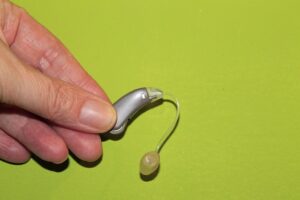
What’s the proper etiquette for communicating with others in wheelchairs, those with speech difficulties or cognitive impairments, or people with hearing or vision loss?
The Disability Rights and Resource Center has some thoughtful tips, like when speaking to a person in wheelchair, if the conversation lasts more than a few minutes, sit down or kneel to get yourself on the same level as the person in the wheelchair. When speaking to a person who has a speech difficulty, if you don’t understand them don’t pretend to. Repeat as much as you do understand, the person’s reaction will guide and clue you in. When communicating with someone with a cognitive impairment one suggestion is to use a calm voice and be reassuring, use short sentences and simple concrete words. If you’re with someone who has hearing loss, look directly at the person and speak slowly and expressively. If they wear a hearing aid keep in mind hearing aids increase volume not clarity of words. Use sign language if you and the person are familiar with it. You can find more ‘Disability Etiquette Tips’ on drrcva.org.
Meanwhile, I had been thinking about this subject on the very night I happened to catch a man named Tom Willis, born without arms, throw out the first pitch at Yankee Stadium with his feet, marking the 29th MLB ballpark in which he’s thrown a first pitch. Amazing man.
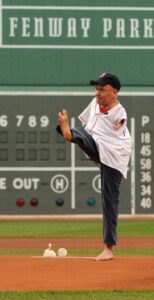
Tom learned to use his ABILITIES to offset his disability. Tom is the President and Founder of the Pitch for Awareness National Tour. He’s pitching his message of the awareness of the abilities of persons with disabilities. He’s a powerful keynote motivational speaker who says … ‘No Hands – No Arms- No Problem” . Tom meets with people who want to turn Obstacles into Opportunities, Challenges into Championships, and make the Impossible … Possible! Tom says Impossible = I aM POSSIBLE! Read. more about Tom on TomsFeet.com.
I was so inspired and touched by this man and could think of no message more important to post. GO TOM!
While thinking about the subject of how to better communicate with those with disabilities, I also wanted to shine a light on a wonderful organization called ‘Positive Exposure’ which is building a more equitable, compassionate world for individuals and communities at risk of stigma and exclusion.
I invited ‘Positive Exposure’ Founder and award-winning photographer, Rick Guidotti to join me on The Debbie Nigro Show today to get his take on how best to communicate with those with disabilities.
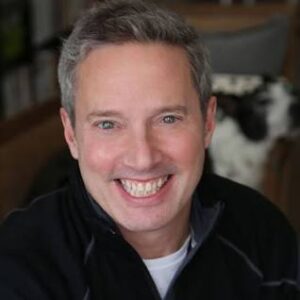
Rick said,” We all share the same need: The need to be seen. The need to be heard. The need to belong”.
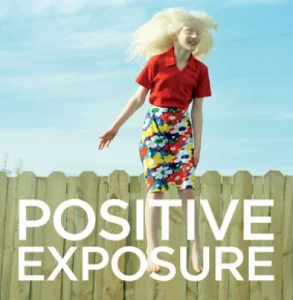
I hope you take a few minutes to listen to Rick Guidotti on this podcast of our live conversation on The Debbie Nigro Show. It’s meaningful. If you’d rather read the transcript of our conversation it is below.
AUDIO TRANSCRIPT:
0:00:00
And now, back to The Debbie Nigro Show.
2
0:00:07
Hey guys, this is The Debbie Nigro Show, and on my wellness day of the week I’m very excited to introduce you to my next guest. As I’m talking about today, just be more sensitive and thoughtful, how’s that sound? When communicating with someone who has a disability. Maybe some etiquette tips you should be aware of. I think we all could use a little refresher course on how to better communicate with those who struggle with various disabilities. It could be anything from being in a wheelchair to a hearing problem to a vision problem to something they were born with. I’m inspired by, again, seeing Tom Willis pitch on the mound last night, the opening pitch at the Yankee game. He was born with, oh gosh, no arms, no hands, and he’s like, no problem. What a guy. Pitch for Awareness is his national tour, and he’s been doing it in 20 2008 I’m sorry and he’s looking for his 30th MLB ballpark pitch coming up which will wrap it up for him and he said you know I was I just think it’s so important that people focus on their abilities versus their disability so that leads me to my beautiful guest who started this amazing organization called Positive Exposure. Rick Guidotti. Am I saying your name right? Rick Guidotti. Rick Guidotti. The award-winning photographer in New York City started Positive Exposure. Did you start this? How long ago? 25 years ago. It is 25 years ago.
1
0:01:58
25 years. I can’t believe it.
2
0:01:59
So I love their story and I know about it because I have a beautiful friend Lisa who works making sure everybody knows your story Rick. I thought of you today when I wanted to do this topic because I love what Positive Exposure is doing that you launched and now it’s a global community building more equitable and compassionate people in the world to deal with each other. You said the most amazing thing when describing Positive Exposure. We all share the same need. The need to be seen, the need to be heard, the need to belong. So you take it from there. I know you got big action going on.
1
0:02:32
No, no, it’s a, thank you, Debbie, thank you so much. It’s such a great topic. You know, I started positive exposure, I’m a fashion photographer, I started, just refusing to see beauty only on covers of magazines but seeing beauty absolutely everywhere. And realistically, when positive exposure started, I was instantly aware that people in the world have an option when they see somebody with a difference walking towards them or rolling towards them. They have an absolute, they have usually just two options. One option is to stare or the other option is to look away and that’s kind of people do uncomfortably they look away but I found out from my community and my friends for the last 25 years that that looking away sometimes is even more painful than the staring. Wow yes. Another way that we see with our hearts we see with the lens of humanity we’re talking about we’re not talking people people that are suffering with the disability people that are victims of no these are people simply living with a disability or a difference and how or approach them and we react to that difference you know it’s we are so united by our differences. We are not divided by them. It’s our differences that unite us. And it’s and and and Hausen’s vision to promote a more inclusive world through photography, through film, and through educational programs, it’s been the greatest gift because it’s something for all of us because we’re so much fun being able to share our stories, share a narrative, and seeing the beauty in human diversity.
2
0:04:03
Well, I can’t thank you enough for sharing that message today. It’s so loud, right? I think everybody who doesn’t have a disability could use a refresher course like I’m doing today about how better to interact with those who we see who are different. And you’re basically saying just don’t act like they’re different.
1
0:04:25
Just see the humanity first and foremost. It’s so important that we have, when we’re looking at someone, we all have assumptions, we all have biases around disability. We have to challenge those biases, challenge those assumptions. Again, once again, these are individuals that are not, most likely the most important thing about them is not their disability. The most interesting thing about them is not their disability. It’s just part of their lives. It’s who they are. It’s important part of their lives, but not the only thing. And to realize that there’s a person or there’s no sadness here. There’s not, oh this person is struggling or a victim of. These are conversations we have to have with ourselves to challenge those biases and challenge those assumptions. That person is living, that person is loved, has told a funny joke, loves a slice of pizza, loves a good beer, these are people, they’re living their lives and for us to understand that the disabled community and the non-disabled community really kind of creating opportunities to work together to see value in all of us. All the long year, we have the right to be right where we are
2
0:05:38
Yeah, and that’s why I thought last night was kind of like a loud Reminder from Tom Lewis who said you know his piece pitching his message of the awareness of the abilities Versus the disability of people who have disabilities now um this community that you’ve created positive exposure dot org this global community who Who interacts there is it the actual individuals? Is it their families? Is it both? Is it, what goes on there?
3
0:06:07
It’s everybody.
1
0:06:08
It’s everybody. We have a community around the globe. We have a multimedia gallery and performance space here in New York City and East Harlem, right at the top of the park at 109th and 5th Avenue, because you get that address in there, but it’s a multimedia gallery and performance space for creating space for individuals and communities at risk of stigma and exclusion. Various opportunities are going like this Friday we’re working we have an adult day here for individuals living with cranial facial differences. They’re coming in it’s a support group, they’re coming in, they’re talking, they’re doing workshops and art and painting and expression and creating monologues and their narrative and being developing advocacy skills. Saturday we’re launching a film that we created on sickle cell and creating an opportunity for our sickle cell community and health care providers in training to come and meet these families, mingle with these families and hear firsthand what it’s like living with sickle cell anemia and the discrimination that many people face when they go in crisis to the hospital or to an emergency room and they’re in agony because they’re in crisis with their sickle cell disease and the people at the hospital believe, oh no, they’re just drug-seeking. So these very important conversations have to happen and it’s not just the individuals themselves, it’s the importance of their family, their network, their community, their friends, their allies. It’s really important to understand how we all need to be allies for each other.
2
0:07:41
So Rick, you guys at Positive Exposure partner, as I understand it, with hundreds of hospital systems and non-profits and educational institutions and you work together to help and change attitudes and sort of do things for people living with genetic, physical, behavioral or intellectual differences. Absolutely. Okay, so I want to make sure that everybody knows it’s very inclusive. This is very valuable for anybody who doesn’t know you exist, who struggles, not necessarily struggles, but who has something that fits them in this category, and their families and caregivers as well. And I love that the medical community is also involved. Oh, it’s so important.
1
0:08:19
Yeah. It’s healthcare. We’re trying, right now we’re creating a series of films called Frame, which is Faces Redefining the Art of Medical Education. Creating opportunities for healthcare providers in training to understand early in their training that it’s never what you’re treating but always who you’re treating.
2
0:08:37
What I love about how you came to this idea was how your background played right into it and I just want to share because I think it’s really interesting that Rick, who you’re listening to right now, Guidotti, right? Guidotti.
1
0:08:51
Guidotti.
2
0:08:52
Guidotti. I’m Italian.
3
0:08:54
I think I get this.
2
0:08:55
Worked in New York City, Milan, Paris, and London. All the big fancy fashion clients, Yves Saint Laurent, Revlon, L’Oreal. He was always told who was beautiful. It’s when you found that moment in your life, that little chance encounter back with that young lady in 1997 who was living with, is it albinism and albinism albino with the common right albinism
1
0:09:18
She didn’t have pigmentation in her hair her skin
2
0:09:20
Beautiful yet never included in the beauty fair. Yes, and I thought that was an amazing Moment to share as to how you were sparked as a photographer Who only you know photograph what other people thought was beautiful to come to this moment where you launch this to? To share with the world. I just think it’s amazing what you’ve done. You know, I’m a champion. How can we help you? I know you have a really big event coming up.
1
0:09:45
We have a big fundraiser at Riverside Church here in New York City on Claremont Avenue on October 12th. Go to our website and purchase tickets. Come make donations. All of our every single penny gets matched and it goes right back into our programming, which is really great. So we’re, I just came back from South Korea and we’re traveling again. We’re in Alberta, Canada. We have an exhibition that opens also very soon at University of Michigan in Ann Arbor and it’s just celebrating our community and we need support so we have these annual fundraisers to help promote and support all of our programming. We have a small crew here at our gallery but we’re really rich in human resources because we have champions everywhere in the world.
2
0:10:28
Is there, and again this is just naive, is there an app or something that those who have maybe the similar challenges can connect with each other?
1
0:10:37
Absolutely, well you certainly can do through, we have a program on our website, as you check on their programs, called Pearls Project. And Pearls are an opportunity for all of our ambassadors around the globe to talk about life from unique perspectives and share ideas and share philosophies, but not just talking about advocacy, but also talking about music videos and film and best friends and homework. So there are ways, many, many ways to make connections.
2
0:11:07
And create some smiles. Connection is really important. I’m a big champion of humans connecting with other humans. I just finished my own little book that’s coming out about this, about putting more effort into being more human to one another. I think the virtual world has gotten in the way of a lot of humanity, even though it’s done some amazing things for humanity in the same breath, right? And the whole not seeing people in person, people have gotten really used to that after the pandemic. So I just wanted to encourage anybody who’s encouraging connection, and that’s why I’m having you on today.
1
0:11:41
And two things here, Deb. One, very important. All of our exhibitions that we create, they’re very, very public, by the way, like the exhibition at the University of Michigan, as you approach this image, all the images are face-mounted on glass or on very highly polished plexi. So as you’re also aware of your own reflection and that gives you the message that it’s not about them, it’s about us, it’s about all of us. I want to offer to you, we just had a book just come out, who did your headshot? I need to do your portrait, I love your energy.
2
0:12:16
I’m scared to do a new real portrait but sure.
1
0:12:18
No, get in here. Really? Come through the phone and I’m just so excited to meet you in photographs.
2
0:12:31
Wow, what an offer that is because I’m scared to get a new headshot. I keep using the same one from like three years ago because I don’t know, things aren’t going so good. You got lights? You got lighting?
1
0:12:40
I’ve got gorgeous lighting.
2
0:12:41
Oh good, that’s what I need, lighting. Okay, redefining beauty for over 25 years. Positive exposure dot org is what we’re talking about right now. It is a global charitable organization and they are making sure that everybody in the world feels included and appreciated and that their beauty is appreciated regardless of their differences. So thank you so much Rick. I’ll enjoy it. Really wonderful. Check out positiveexposure.org. Donate to their cause because they rely on people like you guys out there and you’ll see what they’ve accomplished and help them accomplish more. Have a great day and we’ll be back in touch. You’re awesome. Thanks, Deb. Have a good one. He’s got good energy, too, don’t you think? You know, I think it’s all about energy and and again being more human and being more respectful to everybody on this planet and understanding better how to deal and and understanding better how to deal and communicate with those who we see have disabilities who personally don’t see their own disabilities.
Transcribed with Cockatoo