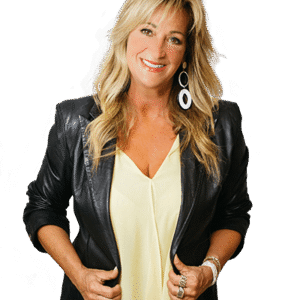

Liver cancer cases are rising dramatically across the United States.
It’s more important than ever to raise awareness about the potentially deadly disease and encourage screening. But seems you have to ASK your Dr. for a liver cancer screening test. Especially if you’re at risk.
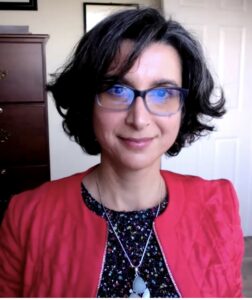
Dr. Nadine Abi-Jaoudeh, Chief of Interventional Radiology and Director of Clinical Research at the University of California, Irvine, is spreading the word about the importance of understanding your liver cancer risk and asking your doctor about screening.
Please listen to this important information in this podcast interview that she shared when she joined me Live on “The Debbie Nigro Show.
Visit Against LiverCancer.com to learn more.
If you’d rather read than listen the audio transcript of our conversation is below.
AUDIO TRANSCRIPT
0:00:00
And now, back to the Debbie Nigro Show
1
0:00:24
Welcome back to the Debbie Nigro Show
Hi guys Nobody likes to talk about icky things like disease except when you catch it early a disease you’re always very grateful you did. So, part of my job here is to educate my audience about things they should know about that I know are important. So, I want to talk to you about liver cancer for a short period of time and introduce you to somebody who’s a lot smarter about this than I am, Dr. Nadine Abidjarde, who is the chief of interventional radiology and director of clinical research at the University of California, Irvine. Her job is to spread the word about the importance of understanding your risk of liver cancer and asking your doctor about screening because oddly liver cancer cases are rising dramatically around the United States. Hey, Dr. Nadine, welcome to my show.
2
0:01:11
Hello, thank you so much. Glad to be here.
1
0:01:16
You have a tough job.
2
0:01:20
Thank you.
1
0:01:21
I don’t know how you do what you do every day and immerse yourself in this world where you are obviously well aware of the challenging scenario with liver cancer and you have to get out there and make sure people are trying to get the screening. How hard is it to convince people to ask to get this done? Is this a new thing you guys are doing? Screening, it’s been around for a
2
0:01:45
little while. I mean at least I would say a good decade. It’s, part of it is getting people to do it, but also part of it is education on the physician side. So patients are their own best advocates. So if you know you have the risk factors, ask for it.
1
0:02:03
Why are cases rising so dramatically in the United States of liver cancer? What’s behind that?
2
0:02:10
Well, so I think it’s a combination of factors. Parts of it are, you know, classically people think of liver cancer, they think of hepatitis or they think of alcoholism, but really also now we’re discovering metabolic syndrome, fatty liver disease, which is associated with diabetes, obesity, all of these things can also cause liver cancer. And so I think it’s the fact that there’s more cases of fatty liver disease that evolve into cirrhosis or even without evolving into cirrhosis can cause liver cancer.
1
0:02:40
Wow. How did you get involved in wanting to be the spokesperson to make sure everybody paid attention to this? What’s your background in understanding liver cancer?
2
0:02:52
So I work in interventional radiology and one of the big things we do is actually do procedures on patients who have liver cancer to basically either treat or palliate the liver cancer. And the reason why I got involved in this is because I have so many patients that, you know, didn’t recognize it early enough and could have had curative options but missed that window. And so I’m very passionate about making sure people know so that they get, because if you catch it early enough, there’s really curative options and very good options. And even if you don’t, there’s still a lot of options and more innovation, but it’s coming in great standard of care treatment options. But I think catching it early is always best.
1
0:03:35
It’s funny. I’m so grateful you’re having this conversation about catching anything early. I’m a two-time cancer survivor because somehow, by the grace of God, I caught ovarian cancer early and I caught breast cancer early. Otherwise I wouldn’t be talking to you. So I understand the power of catching something early. What is the, what are some of the signs? Because I just heard you say, doctors need to get educated. So I don’t think that everybody is all that clear about what signs of this liver cancer might be. And that’s part of the problem is that
2
0:04:10
it’s it’s it doesn’t have a lot of signs. When people have signs it’s kind of very very advanced and so what you have to rely on is really the you know recognizing the risks and then you know getting the screenings which are very non-invasive. It’s simple blood work and an ultrasound.
1
0:04:29
It’s not something they screen for typically when they take a blood test when you go for an annual physical?
4
0:04:35
No.
1
0:04:36
Okay, why can’t we throw that in?
2
0:04:41
I think if you don’t have the cancer, it’s not helpful. So if you don’t have risk factors, it’s just one more blood test but they could if you have any of the risk factors they should and the blood test on its own is not very it’s very specific meaning if you have it and it’s a high it’ll detect it but in some patients you can have the cancer and still with the blood test might look normal so that’s why you need the ultrasound as well. Oh that’s a lot of
1
0:05:10
work man. All right so we’re gonna have people starting to ask when they go to the doctor to have a liver cancer test. Is that what they’re asking for?
2
0:05:21
It’s an AFB, yeah. It’s called AFB. I think the name of it, it’s one test. It’s easier than the actual.
1
0:05:28
Okay, well I get it now. And what’s making me, what I’m starting to think about is all this AI, artificial intelligence, world right as a board-certified radiologist at the University of California where all the big brains are is there any effort being made to utilize AI in terms of diagnosis for this particular disease? There are but
2
0:05:51
it’s again it’s more on the imaging side to really recognize like which ones should be treated which way. There are some, I don’t know that anybody’s tried to implement like looking at risk factors and using AI for that, although that’s a brilliant idea.
1
0:06:13
Is there any age that’s showing up as a median age for this when liver cancer shows up? Is it young people, old people, everybody? I’m curious. It’s basically, it spans a range of ages.
2
0:06:27
It’s most 40 and up because it’s the longer you’ve had the exposure to the risk factors. But I mean diabetes, obesity start off at a young age and so then the cancer can develop sooner. Yeah, I got that.
1
0:06:43
I’m thinking, I don’t know why I’m getting, I’m always thinking like, oh, why can’t we solve all these problems with one like fell swoop? Like you know how you walk in the airport, you go through one of those detectors and you have to put your hands up and they check your whole body and make sure you’re not carrying a gun or anything else crazy? Why can’t we have a medical screening like that? Where they just, they whip through everything. Like okay, liver, heart, kidneys, and you come out the other side knowing where you stand. Why can’t you work on that?
2
0:07:10
I think it’s the things we are working on, but there’s a lot of things that, developments that need to happen before we get there. I see.
1
0:07:19
I know this poor woman’s gonna think I’m nuts because I love to have fun with dark things, otherwise we don’t laugh. Some stuff is not funny, you know, dark is just the way it goes in life. So when you go to work every day, what’s your head like? How does your head work inside? You walk in and what’s already… What are the thoughts in there?
2
0:07:42
Meaning, my thoughts is I need to help the person that’s here in front of me because I want to make sure that they get to stay around longer for whatever they want to do.
1
0:07:58
There are so many caring, wonderful doctors and health care providers in this country who have your heart and thank you for that because goodness knows we need more people like you. But I also know that there’s a lot of frustration going on in the health care industry as evidenced by some of the health care strikes that are going on this week. Is there any kind of stress in terms of your occupation that is causing a bigger problem than the actual occupation itself? Are you feeling like you have enough doctors and enough radiologists to do what you guys need to do?
2
0:08:33
I think after the COVID pandemic, we lost about 10% of the healthcare workforce. And I think that’s part of the stress is we need more people to join healthcare, because there’s a lot of people that need help.
1
0:08:47
Oh, my gosh, and everybody’s getting old at the same time in this country. I had read earlier in the week about CNN reporting on nursing schools who are turning away thousands of applicants during a nursing shortage, if you will, as an example, because they don’t have enough qualified teachers to teach the students to get them qualified. Is anything like that happening in the education side of your specific area of medicine? No. Are there enough teachers to teach what you’re doing every day? Are there enough radiologists teaching other radiologists? Are there enough people in the liver cancer world teaching others? Is that going on?
2
0:09:34
Yeah, there is. There can always be more. But I don’t think it’s as much of a crisis as the nursing.
1
0:09:43
Yeah. Well, that’s good to know. All right. Before we finish our conversation about liver cancer, which, believe me, is just a tough subject because it sounds, you know, it sounds difficult to digest and people need to know about it, of course. But what kind of say you’re diagnosed with liver cancer, what kind of treatments are available for people? What is the protocol? So there’s several treatments.
2
0:10:06
It goes, so if you have a small one surgery and you’re done, if you’re more advanced for example, the current standard of care is T-centric and Avastin for advanced liver cancer. And then if you’re in the intermediate stage, then it’s, you know, it’s what I do, which is the combinations of procedures that are minimally invasive
1
0:10:31
is what we call it. So a lot of options. Yeah, the minimally invasive thing is always appealing, right? There’s a new technology out there, a new company has come out with even better cameras for surgeries like this one that are minimally invasive. So are you guys using the latest, greatest technology?
4
0:10:48
Yes.
3
0:10:49
Very cool.
1
0:10:50
You know, I never knew I could understand how somebody could go in minimally invasive and, you know, take everything out and leave a scar like the size of your fingernail. You’re like, wow, that’s good, really good. All right, well, this is, you know, thank you for the education. It’s one more thing we have to worry about, but I like that we’re going to now be asking, and I will do it too, to be screened for liver cancer. Is that something that surprises doctors when patients are now asking for that since you’re doing your job well?
2
0:11:18
Thank you. I think it may, but don’t let that deter you.
1
0:11:25
Okay. And there’s a website that I know you guys are also suggesting people go to called againstlivercancer.com and teaches you about liver cancer, some risk factors, some cancer screening, questions to ask your doctor. So I thought that was really nice. You guys made it very educational, right? It’s a very common cancer and one of the leading causes of cancer death, mostly because, like anything else, when it’s not caught early, it’s not all that, you know, doesn’t have a great ending. And new cases of liver cancer have more than tripled since 1980, which is really loud and a lot of the signs and symptoms may not be apparent until later stages. So, to get this early, what Dr. Abhijar Day is here to tell us is you’ve got to get screened, okay? If you happen to have a hepatitis B or hepatitis C infection, that’s a risk factor. Alcoholism is a risk factor and there’s some things you just need to be more aware of. Okay, by the way, for those who have no idea and didn’t play Operation, what is your liver responsible for in your body?
2
0:12:33
It’s, the simplest way to describe it is it’s the filter of the body. Okay, see I like that, nice and simple.
1
0:12:39
Your filter is dirty, is that what you’re saying? If you have a problem there? The filter’s dirty, we can’t have dirty filters. Nope. Nope, have you had a screening?
3
0:12:51
Yes.
4
0:12:52
I’m a radiologist.
2
0:12:53
It’s pretty easy for me to screen myself.
1
0:12:57
Okay, this is great. Dr. Nadine, I’m excited I’m pronouncing your name correct. Abhijarde, am I saying it right? Yes. I know. I asked and I want to be sure, is a board-certified radiologist at the University of California, Irvine. 20 years of experience specializing in diagnostic, vascular, and interventional radiology. She’s a chief for the Division of Interventional Radiology. Congratulations, being chief is big news. And a director of clinical research for the Department of Radiological Services at UCI and a member of the department’s Diversity, Equity, and Inclusion Committee. Wow, you’ve got a lot of titles, Doc. Thank you. Thank you so much for investing your life work in such a meaningful way. And there will be thousands of patients who will thank you for now taking to the airwaves and letting people be aware. This is something they have to be aware of. So thank you very much and you have a great day.
2
0:13:58
Thank you.
1
0:13:59
You too.
3
0:14:00
Okay.
1
0:14:01
I can never do what she does every day. So intense, so intense, but wow. Right? That’s why we all have different brains and we’re put on this planet to do different things so we can help one another with different things. We need help with it. Simple as that. Okay, come on back and I’ll get a brighter topic for you, although we do have to talk about some of these things like I did just now because if you don’t know, you don’t know, right? Much less than you thought about getting screened for liver cancer. Now you will. for liver cancer. Now you will. All right, more to come here on the Debbie Nigro Show next. for liver cancer. Now you will. All right, more to come here on the Debbie Nigro Show next.
3
0:14:30
you
Transcribed with Cockatoo