
Keeping the “LIVE” in Alive!
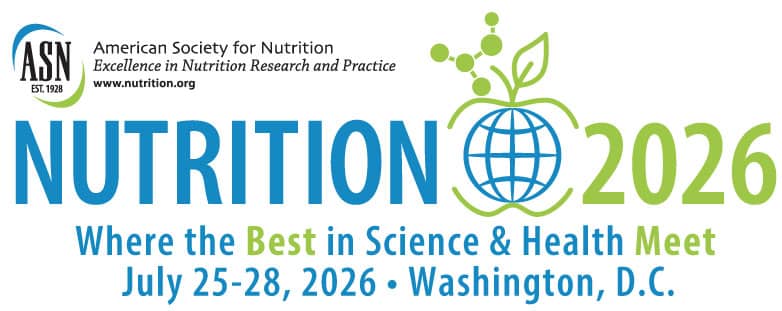
In this Wellness Wednesday Feature Interview , I got a sneak peek at one of the world’s biggest nutrition gatherings—Nutrition 2026, hosted by the American Society for Nutrition. Researchers from around the globe gather to reveal the latest discoveries about how food affects our health.
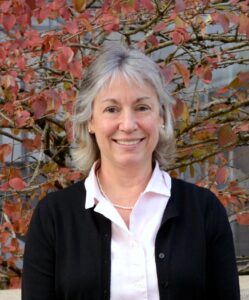
My guest was Dr. Diane Stadler, professor of medicine and director of graduate programs in Human Nutrition at Oregon Health & Science University.
One of the first things we agreed on?
Food really is medicine.
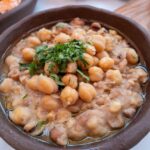
I laughed remembering my Italian grandmothers feeding us what we used to call “peasant food”—beans, greens, fresh vegetables and simple meals from the garden. Funny how those same foods are now considered some of the healthiest things you can eat! As I joked on the show:
“Our ancestors already knew what to do… somewhere along the way we forgot.”
Dr. Stadler explained that convenience and processed foods gradually replaced home cooking over the past several decades—and while they’ve made life easier, they’ve also made healthy eating more complicated.
A Few Big Takeaways
Whole foods still win. Whenever possible, choose foods closer to their natural form instead of heavily processed versions.
GLP-1 medications work—but nutrition still matters. As these weight-loss drugs become more common, researchers are emphasizing the importance of getting enough protein, vitamins, minerals, and exercise to help preserve muscle while losing weight.

Food safety matters too. With recent produce recalls making headlines, Dr. Stadler recommends buying whole vegetables when possible, washing them well, and preparing them yourself.
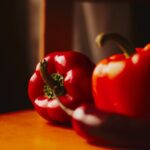
And my favorite surprise? The humble red pepper!
When I asked Diane why she always adds one to her salad, she smiled and said:
“Red peppers are one of the highest sources of vitamin A and vitamin C… they supercharge my day.”
By the end of the interview I had officially declared:
“I’ll always use a red pepper from now on because of Diane!”
Debservation:
Sometimes the newest science simply reminds us of what our grandparents and ancestors practiced all along.
Eat more real food.
Move your body.
Don’t overcomplicate it.
That’s the kind of wellness advice that never goes out of style.
This Week’s Keeping the LIVE in Alive! Challenge
Add one extra colorful vegetable to your plate every day this week. Maybe it’ll be a red pepper… like mine. 🙂
Hope you enjoy our conversation. (BTW: Tune in Every Wellness Wednesday to WGCH radio or WGCH.com and listen for the latest about “Keeping the LIVE in Alive!”
Best!
Debbie
AUDIO TRANSCRIPT:
00:00
And now, back to the Debbie Nigro Show. It might seem crazy what I’m about to say. Sunshine, she’s here, you can take a break. I’m a hot air balloon that could go to space. With the air, like I don’t care, baby, by the way. All right, we’re going to rock and roll right now, getting a sneak peek, guys, as to what’s coming this coming weekend down in Washington, DC Area. It’s Nutrition 2026, which is a huge flagship annual event that’s put on every Year by the American Nutrition Society. Now, I didn’t really know too much about them, but now that I do, I need to share with you.
00:52
So I was reading about what they’re going to be reporting on. You know, these are the smartest people from around the world who research everything nutrition related, and I was blown away about what they’re going to be sharing. But they can’t tell me everything right now, so they can tell me a few little things and I’m getting A sneak peek because they gave me one of their big scientific brains. Diane Stadler, PhD, RDN, LD, professor, Department of Medicine and Director of the Graduate Programs in Human Nutrition and Dietetic Internship at Oregon Health and Science University. That’s a mouthful. Diane, welcome. Thank you. Happy to be here. Diane, food is medicine. You practice that every day? You bet I do. And I encourage everybody that I have an opportunity to engage with to do the same thing. It makes a huge difference, and it’s something that we all can kind of take control over and make good decisions and practice wisely. Funny, I grew up in an Italian family, and my grandmothers cooked what was then called peasant food, right? Which is all the stuff that everybody wants you to eat now. The beans, the greens, everything from the ground.
02:07
When did it go wrong in this country? From we knew what to do, and our ancestors were showing us, and then it went ballistically in the wrong direction. Yeah, it’s, it’s, you know, it has been a process and it has been going on probably since the mid 1940s, all the way up until today, right? We have changed our lifestyles, we’ve changed the way we’ve lived, we’ve stopped depending on backyard subsistence gardening. Efficiency has become the name of the game. We want to do things quickly, efficiently, at the lowest cost possible. And what that has turned into is mass produced foods that are easy to prepare, don’t take a lot of time, and are relatively inexpensive.
03:02
So, we have been walking down this path towards efficiency probably since the 1940s, 1950s, after World War II, and you know what, the change in the workforce, and it has really Course and it has really made a significant impact on our lifestyle, the way we select foods, how we prepare them and how we go about, you know. Teaching our children about what we need to be eating on a regular basis. You know, Diane, it’s very hard to unravel this because there’s a lot of money involved, a lot of big companies, you know, look, go food shopping and you’ll see that there’s, you know, you have to stick around the area of where there’s fresh vegetables and even that’s become a problem. When’s the last time you had an iceberg lettuce salad? My goodness, that just blew my head this past couple of weeks. You know, even though it only happened in a certain area of the world, I haven’t touched a leaf of lettuce.
04:00
Have you? Well, honestly, I do. I mean, every day I have a huge salad with all different types of vegetables in it, and I do it intentionally, right? Because I know that those are the types of foods that are packed with vitamins and minerals, and it’s easy to not do that. So I make myself do it every day. I get a huge bowl, throw in different types of lettuces, dark leafy greens, cut up carrots and cucumbers, throw in tomatoes, always have a Red pepper that I can put in. So I do that and it’s like I’ve made a promise to myself. I know that that’s going to be something that’s important and it’s going to get all those vitamins that I need. We’re going to go back to the red pepper in a second, but I was referring to the cyclospora lettuce disaster. And that has kept me from having my salads.
04:50
I’m not very happy about that. And I was wondering if that’s something that you guys are addressing food safety. Is that coming up at the convention this weekend? Absolutely. It’s a huge component every single year in the summertime and the fall as we approach Thanksgiving holidays. Food safety and Foodborne illness seems to crop up and it’s something that we all need to pay attention to. It’s better if you go back to unprocessed vegetables, right? So you get the whole vegetable and cut it up yourself as opposed to buying bagged greens that have had more potential exposure. So if you can get iceberg of lettuces that you like and pull off those outer leaves and toss those, throw them into the compost pile, and then eat the inner components after you’ve rinsed them, that’s the best way to handle it. Food safety is a huge issue within the food manufacturing industry. I’m glad because it needs to be discussed. So let’s just talk about why you’re here. I’m very excited, and thank you for taking the time and getting this preview with you. You’re on the science Committee of the American Society of Nutrition, their big event, Nutrition 2020 is happening this coming weekend in the Washington, DC area.
06:13
And basically, it’s the big, like the big guns. Everybody around the world, researchers, medical practitioners, policymakers, industry leaders, are coming together to tell you the latest of what they’ve found out. And what I was trying to get was some handle on what the topics are that you’re going to be talking about. And I have them, but we can’t talk about them all. What can you tell me that isn’t embargoed? Well, you know, I think there Are a lot of general information. There is going to be a lot of information that is coming out about the new GLP 1 receptor agonists, the new medications that have been used for diabetes care for a while, but are now being used as a means to help people lose weight and keep that weight off once they’ve lost it, the hard part. And so we’re going to be addressing a number of studies that have come out that have shown that.
07:12
These GLP1 1 receptor agonists are great at facilitating weight loss. But what they also do is because people eat less, you may not be eating as nutrient dense a diet as you need to get all of those vitamins, minerals, the enough protein in your diet. So you really have to think about what you eat when you’re using those medications for weight loss. It’s incredibly important so that you don’t develop any subtle deficiencies that can have a big impact on your you know Daily lifestyle, so I’m gonna be a huge topic. Yeah, and let me tell you what I got in the mail something sidebar random from a wellknown like Motivational guy right who was a big envelope and I opened it up and I happen to like the guy I don’t know how he got my home address, but okay.
08:03
So now the story is he’s trying to promote a particular company that’s come up with something that they’re ahead of the curve has to do with how Skinny people’s faces look after GLP drugs. Like everybody loses muscle, right? So their faces look long, their bodies look long. So this is a new like drug or substance that like puffs you back up. Have you heard about this? Well, I do know that there are different, yes, I have heard about things like this. I don’t know that I’ve heard about this particular one, but that’s right. You know, when you lose weight, you lose both fat mass and muscle mass almost in exactly the same proportion. So you’re going to lose that muscle and why it’s important Keep in mind is you need to make sure you’re eating enough protein, huge component of staying healthy when you are losing weight. But you also need to be moving, you’ve gotta exercise. The two things together, having a higher protein diet or an adequate protein diet and maintaining activity and strength exercising, whatever that looks like for an individual is critical. And that’s because you want to force your body into losing more fat mass than muscle mass, which, you know, these medications are, they’re not, they don’t discriminate.
09:25
You will lose weight from all different components of your body. And so what you want to try and do is really push it into that fat loss as opposed to muscle loss. Got it. I’m looking into that for myself, but that’s not why you’re here today. Well, I was actually looking at some of the releases that came out about what’s going to be discussed at certain sessions, right, over the weekend. It’s a, what is it, three day event down in Washington? Oh, it’s like four and a half. So it’s a major event. Yes. Yeah, we’re the best in science and health meet in Washington, DC Everybody’s coming from around the world. Some of the topics that got me that are embargoed, but I loved it. I’m hoping that somebody comes back is timerestricted eating may help retain cognitive function in older adults. So weight loss with a shorter eating window shows brain benefits beyond the weight loss. They just found that out and we’re going to have a section about that, right? That the daily multivitamin may help older adults maintain functional health. The trials that they did found modest but meaningful improvement and daily If you took a vitamin, everybody wonders, are these things doing any good, right?
10:33
This was disturbing. 80 of toddler foods on grocery shelves are ultra processed. That blew my head. That was like really bad news. Almost half the samples exceeded the recommended sugar, sodium, fat, or calories. That’s not good. Diet, and this was interesting for long term health, everybody’s thinking they’re going to live till forever now. Diet quality matters more than food processing level. So you’re addressing that. And then, of course, plant forward, planetary health, diet linked to lower heart disease risk, blah, So, anything that I didn’t mention that you’re allowed to mention that’s going to be discussed?
11:12
Yeah. You know, I think the things that you mentioned are really important. You know, when you think about food processing, like you mentioned the baby foods, all of those products are going to be processed to a certain level. It’s going to start with whole foods, but they’re going to be processed in a way, and preservatives are going to be added to maintain the color. Certain colorants might be added, but it’s all of those steps that go into converting a food from its original raw form into a shelf stable form that is associated with this ultra processing phase that people are concerned about. Sugar is often added. Salt is often added, different preservatives, sometimes antibiotics, or different chemicals that are part of that processing can be found in those foods and that’s why it’s so important for people to think about is this something that I can do on my own, can I go back and work with the whole food.
12:14
The raw food and incorporate that into my diet as opposed to being so dependent upon shelfstable foods, things that don’t have to be refrigerated, they don’t have to, I don’t have to worry about it going out of its expiration date soon. So I think those are really important concepts to think about. What can I do to go back to that original food and eat it? The other thing that you talked about a little bit is, you know, protein and protein with aging, fiber content of foods. A lot of times when we process foods, we’re minimizing some of the components of that food that might be really high in fiber. And as we age, we know that protein Protein is really important, fiber is really important, you mentioned multivitamin, don’t have to take it every day but take one a few times a week, right? It is your insurance package. That just says you are getting all of those nutrients, those vitamins and minerals that our body can’t make, and we are dependent upon consuming those through the foods that we eat. So, all of those are really good suggestions and things that shouldn’t be too hard for somebody to practice.
13:26
You know what I mean understand why somebody has just not figured out here’s your full day pack of exactly what you need and get rid of all the other food on the shelves and everybody just pick up their package. And then everybody will be fine. Why can’t we just do that? Who could think through all this stuff Diane? Diane. It’s really complicated. Diane tell me about why you put a red pepper in your salad. I got to go back to that. I put a red pepper in my salad because Peppers are, you know, they are highly colored and we know that all the different foods that are highly colored have different pigments that have functional capacity for us. And so red peppers are one of the highest sources of vitamin A and vitamin C. And I know that if I can just incorporate a fourth or a half of red pepper into my, uh, the foods that I eat every day, I’m going to be supercharged, right? And so that’s why red peppers to me are so important. Thank you so much. Diane Stadler, professor of the Department of Medicine and the director of the graduate programs in human nutrition and dietetic internship at the Oregon Health and Science University.
14:28
She’s our spokesperson today in advance of the huge Nutrition 2026 conference from the American Society of Nutrition happening down in the Washington area this weekend. Great insight. I’ll hope for the report of any major highlights next week on the show. Thank you for your time, Diane. Perfect. Thank you so much for covering it. It’s an important topic. I appreciate it. Thank you so much. I’ll always use a red pepper from now on because of Diane. Always.